
Hi All,
Some of you might have seen my recent on the post regarding the build process: http://www.reactos.org/forum/viewtopic.php?f=9&t=12240&start=15
As I mentioned, it would help greatly to lower the barrier-to-entry to less-experienced developers, as well as more experienced developers who might have limited time budgets [Who among us does not have a limited time budget?].
I wanted to send out this message to let everyone know that I intend to use what bit of time that I available right now, at the beginning of January, to tackle this issue head-on. Again, my purpose here is not to step on anyone's toes, but make certain that we never turn away a potentially-valuable contributor simply because they are unnecessarily removed from their development comfort zone. I do realize that there is already on-going work on the build process, and I have no intention of interfering with that.
I will wait 24-hours for any objections/reservations from now before making a hard commitment, but frankly, we really to get this done, like right now.
Happy New Year. :)
-JC

What exactly is the problem here? That prebuilt VS solutions aren't included instead of requiring CMake to generate them first, or what?
On Tue, Jan 1, 2013 at 2:46 PM, J. C. Jones jaibuduvin@gmail.com wrote:
Hi All,
Some of you might have seen my recent on the post regarding the build process: http://www.reactos.org/forum/viewtopic.php?f=9&t=12240&start=15
As I mentioned, it would help greatly to lower the barrier-to-entry to less-experienced developers, as well as more experienced developers who might have limited time budgets [Who among us does not have a limited time budget?].
I wanted to send out this message to let everyone know that I intend to use what bit of time that I available right now, at the beginning of January, to tackle this issue head-on. Again, my purpose here is not to step on anyone's toes, but make certain that we never turn away a potentially-valuable contributor simply because they are unnecessarily removed from their development comfort zone. I do realize that there is already on-going work on the build process, and I have no intention of interfering with that.
I will wait 24-hours for any objections/reservations from now before making a hard commitment, but frankly, we really to get this done, like right now.
Happy New Year. :)
-JC
Ros-dev mailing list Ros-dev@reactos.org http://www.reactos.org/mailman/listinfo/ros-dev
Not so much of a problem, but more of an exploration to see how close Visual Studio could get to the cycle that novice Visual Studio coders are accustomed to, which, of course, would not require cmake. I, Amine, and others had a nice chat in IRC earlier today and we tossed around a few ideas, which we agreed to explore off-line from the main project.
But to be clear, we are not changing from cmake as the main build process.
-JC
From: ros-dev-bounces@reactos.org [mailto:ros-dev-bounces@reactos.org] On Behalf Of Conan Kudo (???.???) Sent: Tuesday, January 01, 2013 3:59 PM To: ReactOS Development List Subject: Re: [ros-dev] Notice Of Intent - Visual Studio Build of ReactOS
What exactly is the problem here? That prebuilt VS solutions aren't included instead of requiring CMake to generate them first, or what?
On Tue, Jan 1, 2013 at 2:46 PM, J. C. Jones jaibuduvin@gmail.com wrote:
Hi All,
Some of you might have seen my recent on the post regarding the build process: http://www.reactos.org/forum/viewtopic.php?f=9 http://www.reactos.org/forum/viewtopic.php?f=9&t=12240&start=15 &t=12240&start=15
As I mentioned, it would help greatly to lower the barrier-to-entry to less-experienced developers, as well as more experienced developers who might have limited time budgets [Who among us does not have a limited time budget?].
I wanted to send out this message to let everyone know that I intend to use what bit of time that I available right now, at the beginning of January, to tackle this issue head-on. Again, my purpose here is not to step on anyone's toes, but make certain that we never turn away a potentially-valuable contributor simply because they are unnecessarily removed from their development comfort zone. I do realize that there is already on-going work on the build process, and I have no intention of interfering with that.
I will wait 24-hours for any objections/reservations from now before making a hard commitment, but frankly, we really to get this done, like right now.
Happy New Year. :)
-JC
_______________________________________________ Ros-dev mailing list Ros-dev@reactos.org http://www.reactos.org/mailman/listinfo/ros-dev
_____
No virus found in this message. Checked by AVG - www.avg.com Version: 2013.0.2805 / Virus Database: 2637/6000 - Release Date: 12/31/12

I will quote the valuable parts of the chat for those who missed it:
Answering the question of "How?" [02:41] <+BlackRabbit> 1. Take the entire tree [02:41] <+BlackRabbit> 2. Build projects that follow the tree exactly, using directory names, according to the tree. [02:42] <+BlackRabbit> So, for example, calc would have a VS project file in it's directory. [02:42] <+BlackRabbit> That's trivial, and would take about 2-3 hours. [02:42] <+BlackRabbit> Then, there are the CPU's. [02:42] <+BlackRabbit> I would make configurations for x86-32 x86-64, PPC, and ARM, [02:43] <+BlackRabbit> Then there are the languages. This one is flexible, and I have two ideas in mind, and I would pick whichever one everyone was most comfortable with. [02:43] <+BlackRabbit> about the kernel-mode components: [02:43] <+BlackRabbit> (please interrupt me if you like) [02:43] <+BlackRabbit> I would use the VS compiler to build the components directly from within VS [02:44] <+BlackRabbit> tweaking the PE images using the command line flags of the VS Linker. [02:44] <+BlackRabbit> (you are probably already doing something similar) [02:44] <@AmineKhaldi> yes, we don't use any headers/lib from the msvc toolchain, just cl, ml...etc [02:44] <+BlackRabbit> I would make debug/release, and any other type of configuration [02:45] <+BlackRabbit> so for example, let's say that you wanted to do a build for ReactOS on x86-32 [02:46] <+BlackRabbit> you would select Debug x86-32, build.
Then Caemyr questioned the need of maintaining the second build system [02:50] <@Caemyr> BlackRabbit: its not about the time, but need of manual intervention at all [02:53] <@Caemyr> anyway, as this would be side by side addition, it would require someone to upkeep it
Amine explained the CMake-based approach, which I would see as the best possible solution for this problem, and what I would use myself: [02:52] <@AmineKhaldi> BlackRabbit: please keep in mind that as per our discussion, cmake is one bug away from this [02:54] <@AmineKhaldi> BlackRabbit: you would be of far far greater help if you fix the cmake bug
Outcome of the discussion: [03:00] <+BlackRabbit> so..I guess that's it. I will work with Amine and others for the sandbox. [03:00] <+BlackRabbit> I will also write up a one-page summary of thoughts so everyone can see what I am thinking as we go along.
Best regards, Aleksey Bragin
On 02.01.2013 9:46, J. C. Jones wrote:
Not so much of a problem, but more of an exploration to see how close Visual Studio could get to the cycle that novice Visual Studio coders are accustomed to, which, of course, would not require cmake. I, Amine, and others had a nice chat in IRC earlier today and we tossed around a few ideas, which we agreed to explore off-line from the main project.
But to be clear, we are not changing from cmake as the main build process.
-JC
*From:*ros-dev-bounces@reactos.org [mailto:ros-dev-bounces@reactos.org] *On Behalf Of *Conan Kudo (???·???) *Sent:* Tuesday, January 01, 2013 3:59 PM *To:* ReactOS Development List *Subject:* Re: [ros-dev] Notice Of Intent - Visual Studio Build of ReactOS
What exactly is the problem here? That prebuilt VS solutions aren't included instead of requiring CMake to generate them first, or what?
On Tue, Jan 1, 2013 at 2:46 PM, J. C. Jones <jaibuduvin@gmail.com mailto:jaibuduvin@gmail.com> wrote:
Hi All,
Some of you might have seen my recent on the post regarding the build process: http://www.reactos.org/forum/viewtopic.php?f=9&t=12240&start=15
As I mentioned, it would help greatly to lower the barrier-to-entry to less-experienced developers, as well as more experienced developers who might have limited time budgets [Who among us does not have a limited time budget?].
I wanted to send out this message to let everyone know that I intend to use what bit of time that I available right now, at the beginning of January, to tackle this issue head-on. Again, my purpose here is not to step on anyone's toes, but make certain that we never turn away a potentially-valuable contributor simply because they are unnecessarily removed from their development comfort zone. I do realize that there is already on-going work on the build process, and I have no intention of interfering with that.
I will wait 24-hours for any objections/reservations from now before making a hard commitment, but frankly, we really to get this done, like right now.
Happy New Year. :)
-JC

Am 02.01.2013 11:40, schrieb Aleksey Bragin:
I will quote the valuable parts of the chat for those who missed it:
Answering the question of "How?" [02:41] <+BlackRabbit> 1. Take the entire tree [02:41] <+BlackRabbit> 2. Build projects that follow the tree exactly, using directory names, according to the tree. [02:42] <+BlackRabbit> So, for example, calc would have a VS project file in it's directory. [02:42] <+BlackRabbit> That's trivial, and would take about 2-3 hours.
Hmm.. just to get it right: What "would take about 2-3 hours"? Creating the VS project file for calc or for all of our (usermode) modules?
Hallo Timo,
I have been enjoying reading your code from time to time over the past two weeks. Very happy to meet you. J
It would take 2-3 hours to create VS projects for all user-mode modules. This assumes, of course, familiarity with the peculiarities of the source tree, which I am learning with Amine. I will spend a bit of time understanding the existing model (lang model to disk building, etc.) once that is understood, I will create a single template for one CPU and one configuration, say, x86-32/Debug, and make sure that this template is perfect, meaning no errors or oddities of any kind. After that, for Amine and me, it is basically turn-the-crank to generate the others: x86-32/Debug, x86-32/Release, x86-64/Debug, x86-64/Release, PPC/Debug PPC/Release, ARMv7 Debug/ARMv7 Release, etc,. Setting up the project options is a big exercise in cut-and-paste, a boring-but-strangely-enjoyable activity, with little tweaks here and there. For example, let's say that the all of the various ARM configurations were special, in that they required explicit specification of Little-Endian to the compiler. We would highlight all the ARM configurations, check the for Little-Endian box (or enter a flag), answer yes to the pop-up dialog, and all X configurations for ARM will get changed at once, while leaving the other configurations intact. The cut-and-paste is done from inside the IDE .
-John
From: ros-dev-bounces@reactos.org [mailto:ros-dev-bounces@reactos.org] On Behalf Of Timo Kreuzer Sent: Wednesday, January 02, 2013 6:00 AM To: ReactOS Development List Subject: Re: [ros-dev] Notice Of Intent - Visual Studio Build of ReactOS
Am 02.01.2013 11:40, schrieb Aleksey Bragin:
I will quote the valuable parts of the chat for those who missed it:
Answering the question of "How?" [02:41] <+BlackRabbit> 1. Take the entire tree [02:41] <+BlackRabbit> 2. Build projects that follow the tree exactly, using directory names, according to the tree. [02:42] <+BlackRabbit> So, for example, calc would have a VS project file in it's directory. [02:42] <+BlackRabbit> That's trivial, and would take about 2-3 hours.
Hmm.. just to get it right: What "would take about 2-3 hours"? Creating the VS project file for calc or for all of our (usermode) modules?
_____
No virus found in this message. Checked by AVG - www.avg.com Version: 2013.0.2805 / Virus Database: 2637/6002 - Release Date: 01/01/13
In the end, CMake will still be a supported build path for MSVC and GCC based builds, right?
On Wed, Jan 2, 2013 at 12:04 PM, J. C. Jones jaibuduvin@gmail.com wrote:
Hallo Timo,****
I have been enjoying reading your code from time to time over the past two weeks. Very happy to meet you. J****
It would take 2-3 hours to create VS projects for all user-mode modules. This assumes, of course, familiarity with the peculiarities of the source tree, which I am learning with Amine. I will spend a bit of time understanding the existing model (lang model to disk building, etc.) once that is understood, I will create a *single* template for one CPU and one configuration, say, x86-32/Debug, and make sure that this template is perfect, meaning no errors or oddities of any kind. After that, for Amine and me, it is basically turn-the-crank to generate the others: x86-32/Debug, x86-32/Release, x86-64/Debug, x86-64/Release, PPC/Debug PPC/Release, ARMv7 Debug/ARMv7 Release, etc,. Setting up the project options is a big exercise in cut-and-paste, a boring-but-strangely-enjoyable activity, with little tweaks here and there. For example, let’s say that the all of the various ARM configurations were special, in that they required explicit specification of Little-Endian to the compiler. We would highlight all the ARM configurations, check the for Little-Endian box (or enter a flag), answer yes to the pop-up dialog, and all X configurations for ARM will get changed at once, while leaving the other configurations intact. The cut-and-paste is done from inside the IDE . ****
-John ****
*From:* ros-dev-bounces@reactos.org [mailto:ros-dev-bounces@reactos.org] *On Behalf Of *Timo Kreuzer *Sent:* Wednesday, January 02, 2013 6:00 AM
*To:* ReactOS Development List *Subject:* Re: [ros-dev] Notice Of Intent - Visual Studio Build of ReactOS
Am 02.01.2013 11:40, schrieb Aleksey Bragin:****
I will quote the valuable parts of the chat for those who missed it:
Answering the question of "How?" [02:41] <+BlackRabbit> 1. Take the entire tree [02:41] <+BlackRabbit> 2. Build projects that follow the tree exactly, using directory names, according to the tree. [02:42] <+BlackRabbit> So, for example, calc would have a VS project file in it's directory. [02:42] <+BlackRabbit> That's trivial, and would take about 2-3 hours.***
Hmm.. just to get it right: What "would take about 2-3 hours"? Creating the VS project file for calc or for all of our (usermode) modules?****
No virus found in this message. Checked by AVG - www.avg.com Version: 2013.0.2805 / Virus Database: 2637/6002 - Release Date: 01/01/13*
Ros-dev mailing list Ros-dev@reactos.org http://www.reactos.org/mailman/listinfo/ros-dev
Yes, it has to be for various logistical reasons.
From: ros-dev-bounces@reactos.org [mailto:ros-dev-bounces@reactos.org] On Behalf Of Conan Kudo (???.???) Sent: Wednesday, January 02, 2013 1:46 PM To: ReactOS Development List Subject: Re: [ros-dev] Notice Of Intent - Visual Studio Build of ReactOS
In the end, CMake will still be a supported build path for MSVC and GCC based builds, right?
On Wed, Jan 2, 2013 at 12:04 PM, J. C. Jones jaibuduvin@gmail.com wrote:
Hallo Timo,
I have been enjoying reading your code from time to time over the past two weeks. Very happy to meet you. J
It would take 2-3 hours to create VS projects for all user-mode modules. This assumes, of course, familiarity with the peculiarities of the source tree, which I am learning with Amine. I will spend a bit of time understanding the existing model (lang model to disk building, etc.) once that is understood, I will create a single template for one CPU and one configuration, say, x86-32/Debug, and make sure that this template is perfect, meaning no errors or oddities of any kind. After that, for Amine and me, it is basically turn-the-crank to generate the others: x86-32/Debug, x86-32/Release, x86-64/Debug, x86-64/Release, PPC/Debug PPC/Release, ARMv7 Debug/ARMv7 Release, etc,. Setting up the project options is a big exercise in cut-and-paste, a boring-but-strangely-enjoyable activity, with little tweaks here and there. For example, let's say that the all of the various ARM configurations were special, in that they required explicit specification of Little-Endian to the compiler. We would highlight all the ARM configurations, check the for Little-Endian box (or enter a flag), answer yes to the pop-up dialog, and all X configurations for ARM will get changed at once, while leaving the other configurations intact. The cut-and-paste is done from inside the IDE .
-John
From: ros-dev-bounces@reactos.org [mailto:ros-dev-bounces@reactos.org] On Behalf Of Timo Kreuzer Sent: Wednesday, January 02, 2013 6:00 AM
To: ReactOS Development List Subject: Re: [ros-dev] Notice Of Intent - Visual Studio Build of ReactOS
Am 02.01.2013 11:40, schrieb Aleksey Bragin:
I will quote the valuable parts of the chat for those who missed it:
Answering the question of "How?" [02:41] <+BlackRabbit> 1. Take the entire tree [02:41] <+BlackRabbit> 2. Build projects that follow the tree exactly, using directory names, according to the tree. [02:42] <+BlackRabbit> So, for example, calc would have a VS project file in it's directory. [02:42] <+BlackRabbit> That's trivial, and would take about 2-3 hours.
Hmm.. just to get it right: What "would take about 2-3 hours"? Creating the VS project file for calc or for all of our (usermode) modules?
_____
No virus found in this message. Checked by AVG - www.avg.com
Version: 2013.0.2805 / Virus Database: 2637/6002 - Release Date: 01/01/13
_______________________________________________ Ros-dev mailing list Ros-dev@reactos.org http://www.reactos.org/mailman/listinfo/ros-dev
_____
No virus found in this message. Checked by AVG - www.avg.com Version: 2013.0.2805 / Virus Database: 2637/6002 - Release Date: 01/01/13
Am 02.01.2013 19:04, schrieb J. C. Jones:
It would take 2-3 hours to create VS projects for all user-mode modules.
No offence, but I think you are highly underestimating the magnitude of our codebase. We are talking about several hundred modules. And you probably also overestimate the pace at which you can create project files. I did that myself for a much smaller project, so I know what I'm talking about. But maybe I'm wrong and they call you "The Machine" :D
Yes, it is one thing to create a project file, which takes 15-30 seconds. It is another thing to get the configuration right. Fortunately, there are copious notes and highly-readable scripts in the tree which practically say what needs to be done, so I do not anticipate any major hurdles.
I spent a little time in the source tree today. I integrated a few modules into Visual Studio 2008, an tested calc, by buiding it from within Visual Studio for x86-32 and x86-64. It ran fine, thanks to the author(Mr. Carlo Bramini) who left good notes in his source code. Just for kicks, I also created an ARM-based project that would run on the Raspberry Pi, compiled it from within VS2008, and ran it inside the emulator that comes with VS2008. That ran fine also. Tomorrow I will ask a colleague to try the following:
1. Pull the repository to his local hard disk from inside Visual Studio.
2. Hit Build.
3. Run calc in an edit- compile-debug loop.
From: ros-dev-bounces@reactos.org [mailto:ros-dev-bounces@reactos.org] On Behalf Of Timo Kreuzer Sent: Thursday, January 03, 2013 2:18 AM To: ReactOS Development List Subject: Re: [ros-dev] Notice Of Intent - Visual Studio Build of ReactOS
Am 02.01.2013 19:04, schrieb J. C. Jones:
It would take 2-3 hours to create VS projects for all user-mode modules.
No offence, but I think you are highly underestimating the magnitude of our codebase. We are talking about several hundred modules. And you probably also overestimate the pace at which you can create project files. I did that myself for a much smaller project, so I know what I'm talking about. But maybe I'm wrong and they call you "The Machine" :D
_____
No virus found in this message. Checked by AVG - www.avg.com Version: 2013.0.2805 / Virus Database: 2637/6005 - Release Date: 01/02/13

VS2008?
Shouldn't you be doing this in 2012, especially considering the much improved support for kernel mode projects.
At the very least you should be using 2010 as 2012 can open 2010 project without modification to project files.
From: ros-dev-bounces@reactos.org [mailto:ros-dev-bounces@reactos.org] On Behalf Of J. C. Jones Sent: 04 January 2013 02:40 To: 'ReactOS Development List' Subject: Re: [ros-dev] Notice Of Intent - Visual Studio Build of ReactOS
Yes, it is one thing to create a project file, which takes 15-30 seconds. It is another thing to get the configuration right. Fortunately, there are copious notes and highly-readable scripts in the tree which practically say what needs to be done, so I do not anticipate any major hurdles.
I spent a little time in the source tree today. I integrated a few modules into Visual Studio 2008, an tested calc, by buiding it from within Visual Studio for x86-32 and x86-64. It ran fine, thanks to the author(Mr. Carlo Bramini) who left good notes in his source code. Just for kicks, I also created an ARM-based project that would run on the Raspberry Pi, compiled it from within VS2008, and ran it inside the emulator that comes with VS2008. That ran fine also. Tomorrow I will ask a colleague to try the following:
1. Pull the repository to his local hard disk from inside Visual Studio.
2. Hit Build.
3. Run calc in an edit- compile-debug loop.
From: ros-dev-bounces@reactos.org mailto:ros-dev-bounces@reactos.org [mailto:ros-dev-bounces@reactos.org] On Behalf Of Timo Kreuzer Sent: Thursday, January 03, 2013 2:18 AM To: ReactOS Development List Subject: Re: [ros-dev] Notice Of Intent - Visual Studio Build of ReactOS
Am 02.01.2013 19:04, schrieb J. C. Jones:
It would take 2-3 hours to create VS projects for all user-mode modules.
No offence, but I think you are highly underestimating the magnitude of our codebase. We are talking about several hundred modules. And you probably also overestimate the pace at which you can create project files. I did that myself for a much smaller project, so I know what I'm talking about. But maybe I'm wrong and they call you "The Machine" :D
_____
No virus found in this message. Checked by AVG - www.avg.com http://www.avg.com Version: 2013.0.2805 / Virus Database: 2637/6005 - Release Date: 01/02/13
Yes.
But initially, I wanted to make it so that anyone, especially a newbie, could go from discovering ReactOS, to an edit-compile-link-debug cycle of "Hello, World!" within the IDE in 30 minutes or less (not the OS, just a single app). That means accommodating whatever version of Visual Studio they are using. VS2008 is safe, because, no matter which version they are using: VS2008, VS2010, VS2011, or VS2012, the conversion would be done automatically, on their machine, and since the project files in SVN would be locked, there'd be no harm done to SVN using this method. However, if I start out with VS2012, for example, then, sure, they could go and download VS2012 alongside say, VS2010.but my goal was to present a totally new user with the SVN URL for ReactOS, and say, "Here is is. Give it a try!", and remove all excuses for them trying it out. [I figured that having to install a 1GB+ tool alongside a very similar tool was a bigger excuse for most newbie developers than having to wait < 5 minutes to watch the VS2012 do its conversion.]
That said, if Visual Studio users came back and said, "We're not using VS2008 anyway!" then I would change it, and I am definitely open to ideas on this.
Sent: Friday, January 04, 2013 3:43 AM To: 'ReactOS Development List' Subject: Re: [ros-dev] Notice Of Intent - Visual Studio Build of ReactOS
VS2008?
Shouldn't you be doing this in 2012, especially considering the much improved support for kernel mode projects.
At the very least you should be using 2010 as 2012 can open 2010 project without modification to project files.
From: ros-dev-bounces@reactos.org [mailto:ros-dev-bounces@reactos.org] On Behalf Of J. C. Jones Sent: 04 January 2013 02:40 To: 'ReactOS Development List' Subject: Re: [ros-dev] Notice Of Intent - Visual Studio Build of ReactOS
Yes, it is one thing to create a project file, which takes 15-30 seconds. It is another thing to get the configuration right. Fortunately, there are copious notes and highly-readable scripts in the tree which practically say what needs to be done, so I do not anticipate any major hurdles.
I spent a little time in the source tree today. I integrated a few modules into Visual Studio 2008, an tested calc, by buiding it from within Visual Studio for x86-32 and x86-64. It ran fine, thanks to the author(Mr. Carlo Bramini) who left good notes in his source code. Just for kicks, I also created an ARM-based project that would run on the Raspberry Pi, compiled it from within VS2008, and ran it inside the emulator that comes with VS2008. That ran fine also. Tomorrow I will ask a colleague to try the following:
1. Pull the repository to his local hard disk from inside Visual Studio.
2. Hit Build.
3. Run calc in an edit- compile-debug loop.
From: ros-dev-bounces@reactos.org [mailto:ros-dev-bounces@reactos.org] On Behalf Of Timo Kreuzer Sent: Thursday, January 03, 2013 2:18 AM To: ReactOS Development List Subject: Re: [ros-dev] Notice Of Intent - Visual Studio Build of ReactOS
Am 02.01.2013 19:04, schrieb J. C. Jones:
It would take 2-3 hours to create VS projects for all user-mode modules.
No offence, but I think you are highly underestimating the magnitude of our codebase. We are talking about several hundred modules. And you probably also overestimate the pace at which you can create project files. I did that myself for a much smaller project, so I know what I'm talking about. But maybe I'm wrong and they call you "The Machine" :D
_____
No virus found in this message. Checked by AVG - www.avg.com Version: 2013.0.2805 / Virus Database: 2637/6005 - Release Date: 01/02/13
_____
No virus found in this message. Checked by AVG - www.avg.com Version: 2013.0.2805 / Virus Database: 2637/6008 - Release Date: 01/03/13
It's up to you of course, but VS2008 is too dated, and VS2012 is "too new" indeed, so many devs will cry about incompatible project files. So, VS2010 would be the ideal bet, as Ged said.
Regards, Alex Bragin
On 04.01.2013 23:21, J. C. Jones wrote:
Yes.
But initially, I wanted to make it so that anyone, especially a newbie, could go from discovering ReactOS, to an edit-compile-link-debug cycle of "Hello, World!" within the IDE in 30 minutes or less (not the OS, just a single app). That means accommodating whatever version of Visual Studio they are using. VS2008 is safe, because, no matter which version they are using: VS2008, VS2010, VS2011, or VS2012, the conversion would be done automatically, on their machine, and since the project files in SVN would be locked, there'd be no harm done to SVN using this method. However, if I start out with VS2012, for example, then, sure, they could go and download VS2012 alongside say, VS2010...but my goal was to present a totally new user with the SVN URL for ReactOS, and say, "Here is is. Give it a try!", and remove all excuses for them trying it out. [I figured that having to install a 1GB+ tool alongside a very similar tool was a bigger excuse for most newbie developers than having to wait < 5 minutes to watch the VS2012 do its conversion.]
That said, if Visual Studio users came back and said, "We're not using VS2008 anyway!" then I would change it, and I am definitely open to ideas on this.
*Sent:*Friday, January 04, 2013 3:43 AM *To:* 'ReactOS Development List' *Subject:* Re: [ros-dev] Notice Of Intent - Visual Studio Build of ReactOS
VS2008?
Shouldn't you be doing this in 2012, especially considering the much improved support for kernel mode projects.
At the very least you should be using 2010 as 2012 can open 2010 project without modification to project files.
*From:*ros-dev-bounces@reactos.org mailto:ros-dev-bounces@reactos.org [mailto:ros-dev-bounces@reactos.org] *On Behalf Of *J. C. Jones *Sent:* 04 January 2013 02:40 *To:* 'ReactOS Development List' *Subject:* Re: [ros-dev] Notice Of Intent - Visual Studio Build of ReactOS
Yes, it is one thing to create a project file, which takes 15-30 seconds. It is another thing to get the configuration right. Fortunately, there are copious notes and highly-readable scripts in the tree which practically say what needs to be done, so I do not anticipate any major hurdles.
I spent a little time in the source tree today. I integrated a few modules into Visual Studio 2008, an tested *calc*, by buiding it from within Visual Studio for x86-32 and x86-64. It ran fine, thanks to the author(Mr. Carlo Bramini) who left good notes in his source code. Just for kicks, I also created an ARM-based project that would run on the Raspberry Pi, compiled it from within VS2008, and ran it inside the emulator that comes with VS2008. That ran fine also. Tomorrow I will ask a colleague to try the following:
1.Pull the repository to his local hard disk from inside Visual Studio.
2.Hit Build.
3.Run *calc* in an edit- compile-debug loop.
*From:*ros-dev-bounces@reactos.org mailto:ros-dev-bounces@reactos.org [mailto:ros-dev-bounces@reactos.org] *On Behalf Of *Timo Kreuzer *Sent:* Thursday, January 03, 2013 2:18 AM *To:* ReactOS Development List *Subject:* Re: [ros-dev] Notice Of Intent - Visual Studio Build of ReactOS
Am 02.01.2013 19:04, schrieb J. C. Jones:
It would take 2-3 hours to create VS projects for all user-mode modules.No offence, but I think you are highly underestimating the magnitude of our codebase. We are talking about several hundred modules. And you probably also overestimate the pace at which you can create project files. I did that myself for a much smaller project, so I know what I'm talking about. But maybe I'm wrong and they call you "The Machine" :D
Ok. VS2010+ it will be. J
I will do a quick review to make sure that we can get all the multiple-CPU development features, etc. and report back.
Cheers.
From: ros-dev-bounces@reactos.org [mailto:ros-dev-bounces@reactos.org] On Behalf Of Aleksey Bragin Sent: Friday, January 04, 2013 1:25 PM To: ReactOS Development List Subject: Re: [ros-dev] Notice Of Intent - Visual Studio Build of ReactOS
It's up to you of course, but VS2008 is too dated, and VS2012 is "too new" indeed, so many devs will cry about incompatible project files. So, VS2010 would be the ideal bet, as Ged said.
Regards, Alex Bragin
On 04.01.2013 23:21, J. C. Jones wrote:
Yes.
But initially, I wanted to make it so that anyone, especially a newbie, could go from discovering ReactOS, to an edit-compile-link-debug cycle of "Hello, World!" within the IDE in 30 minutes or less (not the OS, just a single app). That means accommodating whatever version of Visual Studio they are using. VS2008 is safe, because, no matter which version they are using: VS2008, VS2010, VS2011, or VS2012, the conversion would be done automatically, on their machine, and since the project files in SVN would be locked, there'd be no harm done to SVN using this method. However, if I start out with VS2012, for example, then, sure, they could go and download VS2012 alongside say, VS2010.but my goal was to present a totally new user with the SVN URL for ReactOS, and say, "Here is is. Give it a try!", and remove all excuses for them trying it out. [I figured that having to install a 1GB+ tool alongside a very similar tool was a bigger excuse for most newbie developers than having to wait < 5 minutes to watch the VS2012 do its conversion.]
That said, if Visual Studio users came back and said, "We're not using VS2008 anyway!" then I would change it, and I am definitely open to ideas on this.
Sent: Friday, January 04, 2013 3:43 AM To: 'ReactOS Development List' Subject: Re: [ros-dev] Notice Of Intent - Visual Studio Build of ReactOS
VS2008?
Shouldn't you be doing this in 2012, especially considering the much improved support for kernel mode projects.
At the very least you should be using 2010 as 2012 can open 2010 project without modification to project files.
From: ros-dev-bounces@reactos.org [mailto:ros-dev-bounces@reactos.org] On Behalf Of J. C. Jones Sent: 04 January 2013 02:40 To: 'ReactOS Development List' Subject: Re: [ros-dev] Notice Of Intent - Visual Studio Build of ReactOS
Yes, it is one thing to create a project file, which takes 15-30 seconds. It is another thing to get the configuration right. Fortunately, there are copious notes and highly-readable scripts in the tree which practically say what needs to be done, so I do not anticipate any major hurdles.
I spent a little time in the source tree today. I integrated a few modules into Visual Studio 2008, an tested calc, by buiding it from within Visual Studio for x86-32 and x86-64. It ran fine, thanks to the author(Mr. Carlo Bramini) who left good notes in his source code. Just for kicks, I also created an ARM-based project that would run on the Raspberry Pi, compiled it from within VS2008, and ran it inside the emulator that comes with VS2008. That ran fine also. Tomorrow I will ask a colleague to try the following:
1. Pull the repository to his local hard disk from inside Visual Studio.
2. Hit Build.
3. Run calc in an edit- compile-debug loop.
From: ros-dev-bounces@reactos.org [mailto:ros-dev-bounces@reactos.org] On Behalf Of Timo Kreuzer Sent: Thursday, January 03, 2013 2:18 AM To: ReactOS Development List Subject: Re: [ros-dev] Notice Of Intent - Visual Studio Build of ReactOS
Am 02.01.2013 19:04, schrieb J. C. Jones:
It would take 2-3 hours to create VS projects for all user-mode modules.
No offence, but I think you are highly underestimating the magnitude of our codebase. We are talking about several hundred modules. And you probably also overestimate the pace at which you can create project files. I did that myself for a much smaller project, so I know what I'm talking about. But maybe I'm wrong and they call you "The Machine" :D
_____
_____
No virus found in this message. Checked by AVG - www.avg.com Version: 2013.0.2805 / Virus Database: 2637/6008 - Release Date: 01/03/13

Do not forget, VS2010has acoverageofVCnewbuildengine:msbuild.Vs2008whennot coveredvc.
At 2013-01-05 03:30:23,"J. C. Jones" jaibuduvin@gmail.com wrote:
Ok. VS2010+ it will be. J
I will do a quick review to make sure that we can get all the multiple-CPU development features, etc. and report back.
Cheers.
From:ros-dev-bounces@reactos.org [mailto:ros-dev-bounces@reactos.org] On Behalf Of Aleksey Bragin Sent: Friday, January 04, 2013 1:25 PM To: ReactOS Development List Subject: Re: [ros-dev] Notice Of Intent - Visual Studio Build of ReactOS
It's up to you of course, but VS2008 is too dated, and VS2012 is "too new" indeed, so many devs will cry about incompatible project files. So, VS2010 would be the ideal bet, as Ged said.
Regards, Alex Bragin
On 04.01.2013 23:21, J. C. Jones wrote:
Yes.
But initially, I wanted to make it so that anyone, especially a newbie, could go from discovering ReactOS, to an edit-compile-link-debug cycle of “Hello, World!” within the IDE in 30 minutes or less (not the OS, just a single app). That means accommodating whatever version of Visual Studio they are using. VS2008 is safe, because, no matter which version they are using: VS2008, VS2010, VS2011, or VS2012, the conversion would be done automatically, on their machine, and since the project files in SVN would be locked, there’d be no harm done to SVN using this method. However, if I start out with VS2012, for example, then, sure, they could go and download VS2012 alongside say, VS2010…but my goal was to present a totally new user with the SVN URL for ReactOS, and say, “Here is is. Give it a try!”, and remove all excuses for them trying it out. [I figured that having to install a 1GB+ tool alongside a very similar tool was a bigger excuse for most newbie developers than having to wait < 5 minutes to watch the VS2012 do its conversion.]
That said, if Visual Studio users came back and said, “We’re not using VS2008 anyway!” then I would change it, and I am definitely open to ideas on this.
Sent: Friday, January 04, 2013 3:43 AM To: 'ReactOS Development List' Subject: Re: [ros-dev] Notice Of Intent - Visual Studio Build of ReactOS
VS2008?
Shouldn’t you be doing this in 2012, especially considering the much improved support for kernel mode projects.
At the very least you should be using 2010 as 2012 can open 2010 project without modification to project files.
From:ros-dev-bounces@reactos.org [mailto:ros-dev-bounces@reactos.org] On Behalf Of J. C. Jones Sent: 04 January 2013 02:40 To: 'ReactOS Development List' Subject: Re: [ros-dev] Notice Of Intent - Visual Studio Build of ReactOS
Yes, it is one thing to create a project file, which takes 15-30 seconds. It is another thing to get the configuration right. Fortunately, there are copious notes and highly-readable scripts in the tree which practically say what needs to be done, so I do not anticipate any major hurdles.
I spent a little time in the source tree today. I integrated a few modules into Visual Studio 2008, an tested calc, by buiding it from within Visual Studio for x86-32 and x86-64. It ran fine, thanks to the author(Mr. Carlo Bramini) who left good notes in his source code. Just for kicks, I also created an ARM-based project that would run on the Raspberry Pi, compiled it from within VS2008, and ran it inside the emulator that comes with VS2008. That ran fine also. Tomorrow I will ask a colleague to try the following:
1. Pull the repository to his local hard disk from inside Visual Studio.
2. Hit Build.
3. Run calc in an edit- compile-debug loop.
From:ros-dev-bounces@reactos.org [mailto:ros-dev-bounces@reactos.org] On Behalf Of Timo Kreuzer Sent: Thursday, January 03, 2013 2:18 AM To: ReactOS Development List Subject: Re: [ros-dev] Notice Of Intent - Visual Studio Build of ReactOS
Am 02.01.2013 19:04, schrieb J. C. Jones:
It would take 2-3 hours to create VS projects for all user-mode modules.
No offence, but I think you are highly underestimating the magnitude of our codebase. We are talking about several hundred modules. And you probably also overestimate the pace at which you can create project files. I did that myself for a much smaller project, so I know what I'm talking about. But maybe I'm wrong and they call you "The Machine" :D
No virus found in this message. Checked by AVG - www.avg.com Version: 2013.0.2805 / Virus Database: 2637/6008 - Release Date: 01/03/13
To speed up the process for you, I'd recommend you get a copy of RosBE and run 'make msvc10' This will generate all the project files and a solution for for you, in a mostly buildable state. I think it may also generate some property sheets, which you should definitely try to incorporate. I can help you with suitable property sheets if you'd like some advise on this.
We've already put quite a bit of effort into generating dynamic visual studio projects, (as this is definitely the only maintainable solution IMO), so the outputted vcxproj files should lay down a good base for you to work with.
Ged.
From: "J. C. Jones" jaibuduvin@gmail.com Reply-To: ReactOS List ros-dev@reactos.org Date: Friday, 4 January 2013 19:30 To: ReactOS List ros-dev@reactos.org Subject: Re: [ros-dev] Notice Of Intent - Visual Studio Build of ReactOS
Ok. VS2010+ it will be. J
I will do a quick review to make sure that we can get all the multiple-CPU development features, etc. and report back.
Cheers.
From: ros-dev-bounces@reactos.org [mailto:ros-dev-bounces@reactos.org] On Behalf Of Aleksey Bragin Sent: Friday, January 04, 2013 1:25 PM To: ReactOS Development List Subject: Re: [ros-dev] Notice Of Intent - Visual Studio Build of ReactOS
It's up to you of course, but VS2008 is too dated, and VS2012 is "too new" indeed, so many devs will cry about incompatible project files. So, VS2010 would be the ideal bet, as Ged said.
Regards, Alex Bragin
On 04.01.2013 23:21, J. C. Jones wrote:
Yes.
But initially, I wanted to make it so that anyone, especially a newbie, could go from discovering ReactOS, to an edit-compile-link-debug cycle of ³Hello, World!² within the IDE in 30 minutes or less (not the OS, just a single app). That means accommodating whatever version of Visual Studio they are using. VS2008 is safe, because, no matter which version they are using: VS2008, VS2010, VS2011, or VS2012, the conversion would be done automatically, on their machine, and since the project files in SVN would be locked, there¹d be no harm done to SVN using this method. However, if I start out with VS2012, for example, then, sure, they could go and download VS2012 alongside say, VS2010but my goal was to present a totally new user with the SVN URL for ReactOS, and say, ³Here is is. Give it a try!², and remove all excuses for them trying it out. [I figured that having to install a 1GB+ tool alongside a very similar tool was a bigger excuse for most newbie developers than having to wait < 5 minutes to watch the VS2012 do its conversion.]
That said, if Visual Studio users came back and said, ³We¹re not using VS2008 anyway!² then I would change it, and I am definitely open to ideas on this.
Sent: Friday, January 04, 2013 3:43 AM To: 'ReactOS Development List' Subject: Re: [ros-dev] Notice Of Intent - Visual Studio Build of ReactOS
VS2008? Shouldn¹t you be doing this in 2012, especially considering the much improved support for kernel mode projects. At the very least you should be using 2010 as 2012 can open 2010 project without modification to project files.
From: ros-dev-bounces@reactos.org [mailto:ros-dev-bounces@reactos.org] On Behalf Of J. C. Jones Sent: 04 January 2013 02:40 To: 'ReactOS Development List' Subject: Re: [ros-dev] Notice Of Intent - Visual Studio Build of ReactOS
Yes, it is one thing to create a project file, which takes 15-30 seconds. It is another thing to get the configuration right. Fortunately, there are copious notes and highly-readable scripts in the tree which practically say what needs to be done, so I do not anticipate any major hurdles.
I spent a little time in the source tree today. I integrated a few modules into Visual Studio 2008, an tested calc, by buiding it from within Visual Studio for x86-32 and x86-64. It ran fine, thanks to the author(Mr. Carlo Bramini) who left good notes in his source code. Just for kicks, I also created an ARM-based project that would run on the Raspberry Pi, compiled it from within VS2008, and ran it inside the emulator that comes with VS2008. That ran fine also. Tomorrow I will ask a colleague to try the following:
Pull the repository to his local hard disk from inside Visual Studio.Hit Build.Run calc in an edit- compile-debug loop.From: ros-dev-bounces@reactos.org [mailto:ros-dev-bounces@reactos.org] On Behalf Of Timo Kreuzer Sent: Thursday, January 03, 2013 2:18 AM To: ReactOS Development List Subject: Re: [ros-dev] Notice Of Intent - Visual Studio Build of ReactOS
Am 02.01.2013 19:04, schrieb J. C. Jones:
It would take 2-3 hours to create VS projects for all user-mode modules.
No offence, but I think you are highly underestimating the magnitude of our codebase. We are talking about several hundred modules. And you probably also overestimate the pace at which you can create project files. I did that myself for a much smaller project, so I know what I'm talking about. But maybe I'm wrong and they call you "The Machine" :D
No virus found in this message. Checked by AVG - www.avg.com http://www.avg.com Version: 2013.0.2805 / Virus Database: 2637/6008 - Release Date: 01/03/13 _______________________________________________ Ros-dev mailing list Ros-dev@reactos.org http://www.reactos.org/mailman/listinfo/ros-dev
Ok, let's do that.
I will ping you off-line to get help getting that done.
-John
From: ros-dev-bounces@reactos.org [mailto:ros-dev-bounces@reactos.org] On Behalf Of Ged Murphy Sent: Sunday, January 06, 2013 6:11 AM To: ReactOS List Subject: Re: [ros-dev] Notice Of Intent - Visual Studio Build of ReactOS
To speed up the process for you, I'd recommend you get a copy of RosBE and run 'make msvc10'
This will generate all the project files and a solution for for you, in a mostly buildable state. I think it may also generate some property sheets, which you should definitely try to incorporate. I can help you with suitable property sheets if you'd like some advise on this.
We've already put quite a bit of effort into generating dynamic visual studio projects, (as this is definitely the only maintainable solution IMO), so the outputted vcxproj files should lay down a good base for you to work with.
Ged.
From: "J. C. Jones" jaibuduvin@gmail.com Reply-To: ReactOS List ros-dev@reactos.org Date: Friday, 4 January 2013 19:30 To: ReactOS List ros-dev@reactos.org Subject: Re: [ros-dev] Notice Of Intent - Visual Studio Build of ReactOS
Ok. VS2010+ it will be. J
I will do a quick review to make sure that we can get all the multiple-CPU development features, etc. and report back.
Cheers.
From: ros-dev-bounces@reactos.org [mailto:ros-dev-bounces@reactos.org] On Behalf Of Aleksey Bragin Sent: Friday, January 04, 2013 1:25 PM To: ReactOS Development List Subject: Re: [ros-dev] Notice Of Intent - Visual Studio Build of ReactOS
It's up to you of course, but VS2008 is too dated, and VS2012 is "too new" indeed, so many devs will cry about incompatible project files. So, VS2010 would be the ideal bet, as Ged said.
Regards, Alex Bragin
On 04.01.2013 23:21, J. C. Jones wrote:
Yes.
But initially, I wanted to make it so that anyone, especially a newbie, could go from discovering ReactOS, to an edit-compile-link-debug cycle of "Hello, World!" within the IDE in 30 minutes or less (not the OS, just a single app). That means accommodating whatever version of Visual Studio they are using. VS2008 is safe, because, no matter which version they are using: VS2008, VS2010, VS2011, or VS2012, the conversion would be done automatically, on their machine, and since the project files in SVN would be locked, there'd be no harm done to SVN using this method. However, if I start out with VS2012, for example, then, sure, they could go and download VS2012 alongside say, VS2010.but my goal was to present a totally new user with the SVN URL for ReactOS, and say, "Here is is. Give it a try!", and remove all excuses for them trying it out. [I figured that having to install a 1GB+ tool alongside a very similar tool was a bigger excuse for most newbie developers than having to wait < 5 minutes to watch the VS2012 do its conversion.]
That said, if Visual Studio users came back and said, "We're not using VS2008 anyway!" then I would change it, and I am definitely open to ideas on this.
Sent: Friday, January 04, 2013 3:43 AM To: 'ReactOS Development List' Subject: Re: [ros-dev] Notice Of Intent - Visual Studio Build of ReactOS
VS2008?
Shouldn't you be doing this in 2012, especially considering the much improved support for kernel mode projects.
At the very least you should be using 2010 as 2012 can open 2010 project without modification to project files.
From: ros-dev-bounces@reactos.org [mailto:ros-dev-bounces@reactos.org] On Behalf Of J. C. Jones Sent: 04 January 2013 02:40 To: 'ReactOS Development List' Subject: Re: [ros-dev] Notice Of Intent - Visual Studio Build of ReactOS
Yes, it is one thing to create a project file, which takes 15-30 seconds. It is another thing to get the configuration right. Fortunately, there are copious notes and highly-readable scripts in the tree which practically say what needs to be done, so I do not anticipate any major hurdles.
I spent a little time in the source tree today. I integrated a few modules into Visual Studio 2008, an tested calc, by buiding it from within Visual Studio for x86-32 and x86-64. It ran fine, thanks to the author(Mr. Carlo Bramini) who left good notes in his source code. Just for kicks, I also created an ARM-based project that would run on the Raspberry Pi, compiled it from within VS2008, and ran it inside the emulator that comes with VS2008. That ran fine also. Tomorrow I will ask a colleague to try the following:
1. Pull the repository to his local hard disk from inside Visual Studio.
2. Hit Build.
3. Run calc in an edit- compile-debug loop.
From: ros-dev-bounces@reactos.org [mailto:ros-dev-bounces@reactos.org] On Behalf Of Timo Kreuzer Sent: Thursday, January 03, 2013 2:18 AM To: ReactOS Development List Subject: Re: [ros-dev] Notice Of Intent - Visual Studio Build of ReactOS
Am 02.01.2013 19:04, schrieb J. C. Jones:
It would take 2-3 hours to create VS projects for all user-mode modules.
No offence, but I think you are highly underestimating the magnitude of our codebase. We are talking about several hundred modules. And you probably also overestimate the pace at which you can create project files. I did that myself for a much smaller project, so I know what I'm talking about. But maybe I'm wrong and they call you "The Machine" :D
_____
_____
No virus found in this message. Checked by AVG - www.avg.com Version: 2013.0.2805 / Virus Database: 2637/6008 - Release Date: 01/03/13
_______________________________________________ Ros-dev mailing list Ros-dev@reactos.org http://www.reactos.org/mailman/listinfo/ros-dev
_____
No virus found in this message. Checked by AVG - www.avg.com Version: 2013.0.2805 / Virus Database: 2637/6012 - Release Date: 01/05/13
Hi All,
I wanted to give an update since it has been a few days.
As you know, Amine was already in the process of generating Visual Studio .sln and .vcxproj files for the entire ReactOS tree when I started my own parallel conversion to Visual Studio. Therefore, I dropped my own conversion, since there would have been considerable redundancy had I not. Here is what there is so far (Amine can correct me if I am wrong):
1. Developer pulls entire ReactOS source tree from SVN repository.
2. Developer pulls CMake bundle from ReactOS.org
3. Developer includes in ENVIRONMENT variable the path to Cmake bin directory.
4. Developer executes cmake -version.
5. Developer executes configure VSSolution.
6. Developer opens host-tools\reactos.sln and compiles it.
7. Developer opens reactos\reactos.sln and does build.
I am sure Amine can tell you more if you like.
-John
From: ros-dev-bounces@reactos.org [mailto:ros-dev-bounces@reactos.org] On Behalf Of Ged Murphy Sent: Sunday, January 06, 2013 6:11 AM To: ReactOS List Subject: Re: [ros-dev] Notice Of Intent - Visual Studio Build of ReactOS
To speed up the process for you, I'd recommend you get a copy of RosBE and run 'make msvc10'
This will generate all the project files and a solution for for you, in a mostly buildable state. I think it may also generate some property sheets, which you should definitely try to incorporate. I can help you with suitable property sheets if you'd like some advise on this.
We've already put quite a bit of effort into generating dynamic visual studio projects, (as this is definitely the only maintainable solution IMO), so the outputted vcxproj files should lay down a good base for you to work with.
Ged.
From: "J. C. Jones" jaibuduvin@gmail.com Reply-To: ReactOS List ros-dev@reactos.org Date: Friday, 4 January 2013 19:30 To: ReactOS List ros-dev@reactos.org Subject: Re: [ros-dev] Notice Of Intent - Visual Studio Build of ReactOS
Ok. VS2010+ it will be. J
I will do a quick review to make sure that we can get all the multiple-CPU development features, etc. and report back.
Cheers.
From: ros-dev-bounces@reactos.org [mailto:ros-dev-bounces@reactos.org] On Behalf Of Aleksey Bragin Sent: Friday, January 04, 2013 1:25 PM To: ReactOS Development List Subject: Re: [ros-dev] Notice Of Intent - Visual Studio Build of ReactOS
It's up to you of course, but VS2008 is too dated, and VS2012 is "too new" indeed, so many devs will cry about incompatible project files. So, VS2010 would be the ideal bet, as Ged said.
Regards, Alex Bragin
On 04.01.2013 23:21, J. C. Jones wrote:
Yes.
But initially, I wanted to make it so that anyone, especially a newbie, could go from discovering ReactOS, to an edit-compile-link-debug cycle of "Hello, World!" within the IDE in 30 minutes or less (not the OS, just a single app). That means accommodating whatever version of Visual Studio they are using. VS2008 is safe, because, no matter which version they are using: VS2008, VS2010, VS2011, or VS2012, the conversion would be done automatically, on their machine, and since the project files in SVN would be locked, there'd be no harm done to SVN using this method. However, if I start out with VS2012, for example, then, sure, they could go and download VS2012 alongside say, VS2010.but my goal was to present a totally new user with the SVN URL for ReactOS, and say, "Here is is. Give it a try!", and remove all excuses for them trying it out. [I figured that having to install a 1GB+ tool alongside a very similar tool was a bigger excuse for most newbie developers than having to wait < 5 minutes to watch the VS2012 do its conversion.]
That said, if Visual Studio users came back and said, "We're not using VS2008 anyway!" then I would change it, and I am definitely open to ideas on this.
Sent: Friday, January 04, 2013 3:43 AM To: 'ReactOS Development List' Subject: Re: [ros-dev] Notice Of Intent - Visual Studio Build of ReactOS
VS2008?
Shouldn't you be doing this in 2012, especially considering the much improved support for kernel mode projects.
At the very least you should be using 2010 as 2012 can open 2010 project without modification to project files.
From: ros-dev-bounces@reactos.org [mailto:ros-dev-bounces@reactos.org] On Behalf Of J. C. Jones Sent: 04 January 2013 02:40 To: 'ReactOS Development List' Subject: Re: [ros-dev] Notice Of Intent - Visual Studio Build of ReactOS
Yes, it is one thing to create a project file, which takes 15-30 seconds. It is another thing to get the configuration right. Fortunately, there are copious notes and highly-readable scripts in the tree which practically say what needs to be done, so I do not anticipate any major hurdles.
I spent a little time in the source tree today. I integrated a few modules into Visual Studio 2008, an tested calc, by buiding it from within Visual Studio for x86-32 and x86-64. It ran fine, thanks to the author(Mr. Carlo Bramini) who left good notes in his source code. Just for kicks, I also created an ARM-based project that would run on the Raspberry Pi, compiled it from within VS2008, and ran it inside the emulator that comes with VS2008. That ran fine also. Tomorrow I will ask a colleague to try the following:
1. Pull the repository to his local hard disk from inside Visual Studio.
2. Hit Build.
3. Run calc in an edit- compile-debug loop.
From: ros-dev-bounces@reactos.org [mailto:ros-dev-bounces@reactos.org] On Behalf Of Timo Kreuzer Sent: Thursday, January 03, 2013 2:18 AM To: ReactOS Development List Subject: Re: [ros-dev] Notice Of Intent - Visual Studio Build of ReactOS
Am 02.01.2013 19:04, schrieb J. C. Jones:
It would take 2-3 hours to create VS projects for all user-mode modules.
No offence, but I think you are highly underestimating the magnitude of our codebase. We are talking about several hundred modules. And you probably also overestimate the pace at which you can create project files. I did that myself for a much smaller project, so I know what I'm talking about. But maybe I'm wrong and they call you "The Machine" :D
_____
_____
No virus found in this message. Checked by AVG - www.avg.com Version: 2013.0.2805 / Virus Database: 2637/6008 - Release Date: 01/03/13
_______________________________________________ Ros-dev mailing list Ros-dev@reactos.org http://www.reactos.org/mailman/listinfo/ros-dev
_____
No virus found in this message. Checked by AVG - www.avg.com Version: 2013.0.2805 / Virus Database: 2637/6012 - Release Date: 01/05/13
I suggestasln fileineach directory.Onlyasln fileis too big,very slow to load.
At 2013-01-11 07:01:28,"J. C. Jones" jaibuduvin@gmail.com wrote:
Hi All,
I wanted to give an update since it has been a few days.
As you know, Amine was already in the process of generating Visual Studio .sln and .vcxproj files for the entire ReactOS tree when I started my own parallel conversion to Visual Studio. Therefore, I dropped my own conversion, since there would have been considerable redundancy had I not. Here is what there is so far (Amine can correct me if I am wrong):
1. Developer pulls entire ReactOS source tree from SVN repository.
2. Developer pulls CMake bundle from ReactOS.org
3. Developer includes in ENVIRONMENT variable the path to Cmake bin directory.
4. Developer executes cmake–version.
5. Developer executes configureVSSolution.
6. Developer opens host-tools\reactos.sln and compiles it.
7. Developer opens reactos\reactos.sln and does build.
I am sure Amine can tell you more if you like.
-John
From:ros-dev-bounces@reactos.org [mailto:ros-dev-bounces@reactos.org] On Behalf Of Ged Murphy Sent: Sunday, January 06, 2013 6:11 AM To: ReactOS List Subject: Re: [ros-dev] Notice Of Intent - Visual Studio Build of ReactOS
To speed up the process for you, I'd recommend you get a copy of RosBE and run 'make msvc10'
This will generate all the project files and a solution for for you, in a mostly buildable state. I think it may also generate some property sheets, which you should definitely try to incorporate. I can help you with suitable property sheets if you'd like some advise on this.
We've already put quite a bit of effort into generating dynamic visual studio projects, (as this is definitely the only maintainable solution IMO), so the outputted vcxproj files should lay down a good base for you to work with.
Ged.
From: "J. C. Jones" jaibuduvin@gmail.com Reply-To: ReactOS List ros-dev@reactos.org Date: Friday, 4 January 2013 19:30 To: ReactOS List ros-dev@reactos.org Subject: Re: [ros-dev] Notice Of Intent - Visual Studio Build of ReactOS
Ok. VS2010+ it will be. J
I will do a quick review to make sure that we can get all the multiple-CPU development features, etc. and report back.
Cheers.
From:ros-dev-bounces@reactos.org [mailto:ros-dev-bounces@reactos.org] On Behalf Of Aleksey Bragin Sent: Friday, January 04, 2013 1:25 PM To: ReactOS Development List Subject: Re: [ros-dev] Notice Of Intent - Visual Studio Build of ReactOS
It's up to you of course, but VS2008 is too dated, and VS2012 is "too new" indeed, so many devs will cry about incompatible project files. So, VS2010 would be the ideal bet, as Ged said.
Regards, Alex Bragin
On 04.01.2013 23:21, J. C. Jones wrote:
Yes.
But initially, I wanted to make it so that anyone, especially a newbie, could go from discovering ReactOS, to an edit-compile-link-debug cycle of “Hello, World!” within the IDE in 30 minutes or less (not the OS, just a single app). That means accommodating whatever version of Visual Studio they are using. VS2008 is safe, because, no matter which version they are using: VS2008, VS2010, VS2011, or VS2012, the conversion would be done automatically, on their machine, and since the project files in SVN would be locked, there’d be no harm done to SVN using this method. However, if I start out with VS2012, for example, then, sure, they could go and download VS2012 alongside say, VS2010…but my goal was to present a totally new user with the SVN URL for ReactOS, and say, “Here is is. Give it a try!”, and remove all excuses for them trying it out. [I figured that having to install a 1GB+ tool alongside a very similar tool was a bigger excuse for most newbie developers than having to wait < 5 minutes to watch the VS2012 do its conversion.]
That said, if Visual Studio users came back and said, “We’re not using VS2008 anyway!” then I would change it, and I am definitely open to ideas on this.
Sent: Friday, January 04, 2013 3:43 AM To: 'ReactOS Development List' Subject: Re: [ros-dev] Notice Of Intent - Visual Studio Build of ReactOS
VS2008?
Shouldn’t you be doing this in 2012, especially considering the much improved support for kernel mode projects.
At the very least you should be using 2010 as 2012 can open 2010 project without modification to project files.
From:ros-dev-bounces@reactos.org [mailto:ros-dev-bounces@reactos.org] On Behalf Of J. C. Jones Sent: 04 January 2013 02:40 To: 'ReactOS Development List' Subject: Re: [ros-dev] Notice Of Intent - Visual Studio Build of ReactOS
Yes, it is one thing to create a project file, which takes 15-30 seconds. It is another thing to get the configuration right. Fortunately, there are copious notes and highly-readable scripts in the tree which practically say what needs to be done, so I do not anticipate any major hurdles.
I spent a little time in the source tree today. I integrated a few modules into Visual Studio 2008, an tested calc, by buiding it from within Visual Studio for x86-32 and x86-64. It ran fine, thanks to the author(Mr. Carlo Bramini) who left good notes in his source code. Just for kicks, I also created an ARM-based project that would run on the Raspberry Pi, compiled it from within VS2008, and ran it inside the emulator that comes with VS2008. That ran fine also. Tomorrow I will ask a colleague to try the following:
1. Pull the repository to his local hard disk from inside Visual Studio.
2. Hit Build.
3. Run calc in an edit- compile-debug loop.
From:ros-dev-bounces@reactos.org [mailto:ros-dev-bounces@reactos.org] On Behalf Of Timo Kreuzer Sent: Thursday, January 03, 2013 2:18 AM To: ReactOS Development List Subject: Re: [ros-dev] Notice Of Intent - Visual Studio Build of ReactOS
Am 02.01.2013 19:04, schrieb J. C. Jones:
It would take 2-3 hours to create VS projects for all user-mode modules.
No offence, but I think you are highly underestimating the magnitude of our codebase. We are talking about several hundred modules. And you probably also overestimate the pace at which you can create project files. I did that myself for a much smaller project, so I know what I'm talking about. But maybe I'm wrong and they call you "The Machine" :D
No virus found in this message. Checked by AVG - www.avg.com Version: 2013.0.2805 / Virus Database: 2637/6008 - Release Date: 01/03/13
_______________________________________________ Ros-dev mailing list Ros-dev@reactos.orghttp://www.reactos.org/mailman/listinfo/ros-dev
No virus found in this message. Checked by AVG - www.avg.com Version: 2013.0.2805 / Virus Database: 2637/6012 - Release Date: 01/05/13
It also takes quite a while to close: about 1 minute on my Virtual Box machine (1GB RAM) running inside i5/8GB.
Having a .sln file for each project would reduce the load time obviously, but that would defeat the purpose of using an IDE. There is a natural workflow with the IDE. The idea is to capture that workflow. If the work flow is lost, then it makes more sense to go back to using Visual Studio as an editor, and building "manually", because there is such a thing as the "productivity" tool becoming a burden itself..
I am wondering if the load-time can be reduced by reworking the project settings. From the moment I load the .sln, to the moment that I can start editing a .c file, there is a 48-second delay in the virtual machine above. Of course, during this delay, Visual Studio is:
1. building internal dependency graphs based on #include files.
2. building internal parse tree to support IntelliSense and other things.
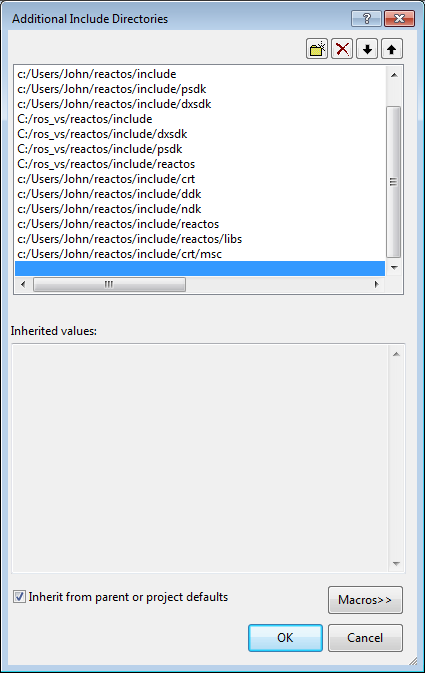
As it stands, unless I am mistaken, the #include directories that are being specified to the IDE include superfluous paths, which would result in a (likely very small) performance increase based on directory searching alone. Here is the list of the #include directories for the calc application:
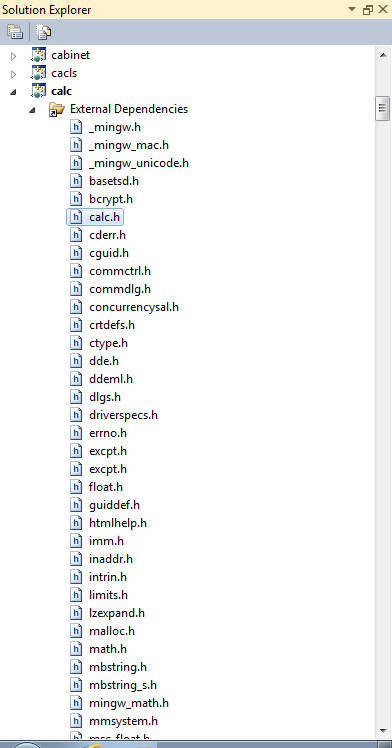
Here is a partial list of the #include file dependencies for calc. One can conclude that there might be dependencies that are superfluous:
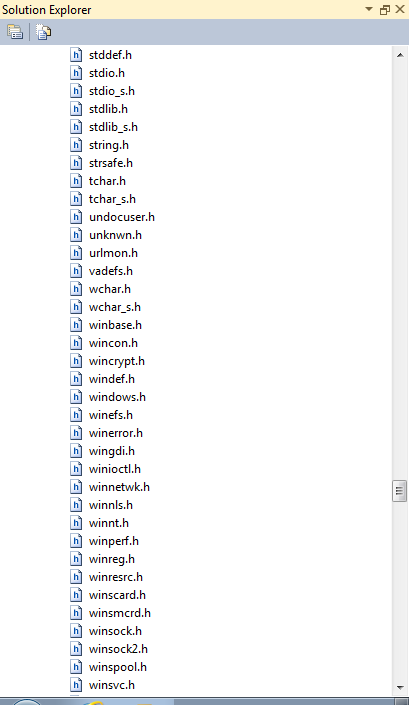
This appears to be the case for several applications, including Notepad, which includes headers for cryptography and networking:
There are things that the programmer can do to reduce the pollution of the compiler's parse tree. One should add the following macro to the compiler's command-line when possible:
WIN32_LEAN_AND_MEAN
This #define disables entire blocks of /#ifdef,#include, #include, #include, #include, #include,#endif/ sequences in Windows(-like?) header files, which would obviously prevent the compiler from processing those header files into its parse tree.
As a basic metric, before leaving the conversion to Amine, I converted roughly 10% of the 800 projects in ReactOS to the IDE. The load time was 3 seconds for this 10%, but I had not yet specified the #include paths to the IDE, and hence, the code was not building, and surely, the edit-time compilation was aborting each time that it could not find a #include file, for, say, mminit.c.
This leaves us to conclude that the best way to find out what the true performance will be is to finish the structure of the .sln and .vcproj files to their final state, removing superfluous paths and inclusions, and measure that.
Finally, all of this is only for x86-32. There is still x86-64, and ARM to consider. Fortunately, Visual Studio knows better than to build IntelliSense databases for all CPU's simultaneously. When the user tells the IDE to use a particular CPU, that is when Visual Studio starts is computation of the IntelliSense parse-tree.
-John
From: ros-dev-bounces@reactos.org [mailto:ros-dev-bounces@reactos.org] On Behalf Of BinSys Sent: Thursday, January 10, 2013 11:48 PM To: ReactOS Development List Subject: Re: [ros-dev] Notice Of Intent - Visual Studio Build of ReactOS
I suggest a sln file in each directory. Only a sln file is too
big, very slow to load.
At 2013-01-11 07:01:28,"J. C. Jones" jaibuduvin@gmail.com wrote:
Hi All,
I wanted to give an update since it has been a few days.
As you know, Amine was already in the process of generating Visual Studio .sln and .vcxproj files for the entire ReactOS tree when I started my own parallel conversion to Visual Studio. Therefore, I dropped my own conversion, since there would have been considerable redundancy had I not. Here is what there is so far (Amine can correct me if I am wrong):
1. Developer pulls entire ReactOS source tree from SVN repository.
2. Developer pulls CMake bundle from ReactOS.org
3. Developer includes in ENVIRONMENT variable the path to Cmake bin directory.
4. Developer executes cmake -version.
5. Developer executes configure VSSolution.
6. Developer opens host-tools\reactos.sln and compiles it.
7. Developer opens reactos\reactos.sln and does build.
I am sure Amine can tell you more if you like.
-John
From: ros-dev-bounces@reactos.org [mailto:ros-dev-bounces@reactos.org] On Behalf Of Ged Murphy Sent: Sunday, January 06, 2013 6:11 AM To: ReactOS List Subject: Re: [ros-dev] Notice Of Intent - Visual Studio Build of ReactOS
To speed up the process for you, I'd recommend you get a copy of RosBE and run 'make msvc10'
This will generate all the project files and a solution for for you, in a mostly buildable state. I think it may also generate some property sheets, which you should definitely try to incorporate. I can help you with suitable property sheets if you'd like some advise on this.
We've already put quite a bit of effort into generating dynamic visual studio projects, (as this is definitely the only maintainable solution IMO), so the outputted vcxproj files should lay down a good base for you to work with.
Ged.
From: "J. C. Jones" jaibuduvin@gmail.com Reply-To: ReactOS List ros-dev@reactos.org Date: Friday, 4 January 2013 19:30 To: ReactOS List ros-dev@reactos.org Subject: Re: [ros-dev] Notice Of Intent - Visual Studio Build of ReactOS
Ok. VS2010+ it will be. J
I will do a quick review to make sure that we can get all the multiple-CPU development features, etc. and report back.
Cheers.
From: ros-dev-bounces@reactos.org [mailto:ros-dev-bounces@reactos.org] On Behalf Of Aleksey Bragin Sent: Friday, January 04, 2013 1:25 PM To: ReactOS Development List Subject: Re: [ros-dev] Notice Of Intent - Visual Studio Build of ReactOS
It's up to you of course, but VS2008 is too dated, and VS2012 is "too new" indeed, so many devs will cry about incompatible project files. So, VS2010 would be the ideal bet, as Ged said.
Regards, Alex Bragin
On 04.01.2013 23:21, J. C. Jones wrote:
Yes.
But initially, I wanted to make it so that anyone, especially a newbie, could go from discovering ReactOS, to an edit-compile-link-debug cycle of "Hello, World!" within the IDE in 30 minutes or less (not the OS, just a single app). That means accommodating whatever version of Visual Studio they are using. VS2008 is safe, because, no matter which version they are using: VS2008, VS2010, VS2011, or VS2012, the conversion would be done automatically, on their machine, and since the project files in SVN would be locked, there'd be no harm done to SVN using this method. However, if I start out with VS2012, for example, then, sure, they could go and download VS2012 alongside say, VS2010.but my goal was to present a totally new user with the SVN URL for ReactOS, and say, "Here is is. Give it a try!", and remove all excuses for them trying it out. [I figured that having to install a 1GB+ tool alongside a very similar tool was a bigger excuse for most newbie developers than having to wait < 5 minutes to watch the VS2012 do its conversion.]
That said, if Visual Studio users came back and said, "We're not using VS2008 anyway!" then I would change it, and I am definitely open to ideas on this.
Sent: Friday, January 04, 2013 3:43 AM To: 'ReactOS Development List' Subject: Re: [ros-dev] Notice Of Intent - Visual Studio Build of ReactOS
VS2008?
Shouldn't you be doing this in 2012, especially considering the much improved support for kernel mode projects.
At the very least you should be using 2010 as 2012 can open 2010 project without modification to project files.
From: ros-dev-bounces@reactos.org [mailto:ros-dev-bounces@reactos.org] On Behalf Of J. C. Jones Sent: 04 January 2013 02:40 To: 'ReactOS Development List' Subject: Re: [ros-dev] Notice Of Intent - Visual Studio Build of ReactOS
Yes, it is one thing to create a project file, which takes 15-30 seconds. It is another thing to get the configuration right. Fortunately, there are copious notes and highly-readable scripts in the tree which practically say what needs to be done, so I do not anticipate any major hurdles.
I spent a little time in the source tree today. I integrated a few modules into Visual Studio 2008, an tested calc, by buiding it from within Visual Studio for x86-32 and x86-64. It ran fine, thanks to the author(Mr. Carlo Bramini) who left good notes in his source code. Just for kicks, I also created an ARM-based project that would run on the Raspberry Pi, compiled it from within VS2008, and ran it inside the emulator that comes with VS2008. That ran fine also. Tomorrow I will ask a colleague to try the following:
1. Pull the repository to his local hard disk from inside Visual Studio.
2. Hit Build.
3. Run calc in an edit- compile-debug loop.
From: ros-dev-bounces@reactos.org [mailto:ros-dev-bounces@reactos.org] On Behalf Of Timo Kreuzer Sent: Thursday, January 03, 2013 2:18 AM To: ReactOS Development List Subject: Re: [ros-dev] Notice Of Intent - Visual Studio Build of ReactOS
Am 02.01.2013 19:04, schrieb J. C. Jones:
It would take 2-3 hours to create VS projects for all user-mode modules.
No offence, but I think you are highly underestimating the magnitude of our codebase. We are talking about several hundred modules. And you probably also overestimate the pace at which you can create project files. I did that myself for a much smaller project, so I know what I'm talking about. But maybe I'm wrong and they call you "The Machine" :D
_____
_____
No virus found in this message. Checked by AVG - www.avg.com Version: 2013.0.2805 / Virus Database: 2637/6008 - Release Date: 01/03/13
_______________________________________________ Ros-dev mailing list Ros-dev@reactos.org http://www.reactos.org/mailman/listinfo/ros-dev
_____
No virus found in this message. Checked by AVG - www.avg.com Version: 2013.0.2805 / Virus Database: 2637/6012 - Release Date: 01/05/13
_____
No virus found in this message. Checked by AVG - www.avg.com Version: 2013.0.2890 / Virus Database: 2637/6023 - Release Date: 01/10/13
Ifyouopenthetheoutput-VS11-i386\reactos\ntoskrnl\NTOS.slnfile,you will find thatthedependenceis not lost.Like this,each componenthasitsownsln file,very convenient.Rootsln fileis still available.Only atthe beginningofeachCMakeLists.txtfileaPROJECT (***).
In addition, VisualDDKvery goodtheWinDBGfunctionalityportedto the IDE.
At 2013-01-12 02:49:02,"J. C. Jones" jaibuduvin@gmail.com wrote:
It also takes quite a while to close: about 1 minute on my Virtual Box machine (1GB RAM) running inside i5/8GB.
Having a .sln file for each project would reduce the load time obviously, but that would defeat the purpose of using an IDE. There is a natural workflow with the IDE. The idea is to capture that workflow. If the work flow is lost, then it makes more sense to go back to using Visual Studio as an editor, and building “manually”, because there is such a thing as the “productivity” tool becoming a burden itself..
I am wondering if the load-time can be reduced by reworking the project settings. From the moment I load the .sln, to the moment that I can start editing a .c file, there is a 48-second delay in the virtual machine above. Of course, during this delay, Visual Studio is:
1. building internal dependency graphs based on #include files.
2. building internal parse tree to support IntelliSense and other things.
As it stands, unless I am mistaken, the #include directories that are being specified to the IDE include superfluous paths, which would result in a (likely very small) performance increase based on directory searching alone. Here is the list of the #include directories for the calc application:
Here is a partial list of the #include file dependencies for calc. One can conclude that there might be dependencies that are superfluous:
This appears to be the case for several applications, including Notepad, which includes headers for cryptography and networking:
There are things that the programmer can do to reduce the pollution of the compiler’s parse tree. One should add the following macro to the compiler’s command-line when possible:
WIN32_LEAN_AND_MEAN
This #define disables entire blocks of /#ifdef,#include, #include, #include, #include, #include,#endif/ sequences in Windows(-like?) header files, which would obviously prevent the compiler from processing those header files into its parse tree.
As a basic metric, before leaving the conversion to Amine, I converted roughly 10% of the 800 projects in ReactOS to the IDE. The load time was 3 seconds for this 10%, but I had not yet specified the #include paths to the IDE, and hence, the code was not building, and surely, the edit-time compilation was aborting each time that it could not find a #include file, for, say, mminit.c.
This leaves us to conclude that the best way to find out what the true performance will be is to finish the structure of the .sln and .vcproj files to their final state, removing superfluous paths and inclusions, and measure that.
Finally, all of this is only for x86-32. There is still x86-64, and ARM to consider. Fortunately, Visual Studio knows better than to build IntelliSense databases for all CPU’s simultaneously. When the user tells the IDE to use a particular CPU, that is when Visual Studio starts is computation of the IntelliSense parse-tree.
-John
From:ros-dev-bounces@reactos.org [mailto:ros-dev-bounces@reactos.org] On Behalf Of BinSys Sent: Thursday, January 10, 2013 11:48 PM To: ReactOS Development List Subject: Re: [ros-dev] Notice Of Intent - Visual Studio Build of ReactOS
I suggest asln fileineach directory. Onlyasln fileis too big, very slow to load.
At 2013-01-11 07:01:28,"J. C. Jones" jaibuduvin@gmail.com wrote:
Hi All,
I wanted to give an update since it has been a few days.
As you know, Amine was already in the process of generating Visual Studio .sln and .vcxproj files for the entire ReactOS tree when I started my own parallel conversion to Visual Studio. Therefore, I dropped my own conversion, since there would have been considerable redundancy had I not. Here is what there is so far (Amine can correct me if I am wrong):
1. Developer pulls entire ReactOS source tree from SVN repository.
2. Developer pulls CMake bundle from ReactOS.org
3. Developer includes in ENVIRONMENT variable the path to Cmake bin directory.
4. Developer executes cmake–version.
5. Developer executes configureVSSolution.
6. Developer opens host-tools\reactos.sln and compiles it.
7. Developer opens reactos\reactos.sln and does build.
I am sure Amine can tell you more if you like.
-John
From:ros-dev-bounces@reactos.org [mailto:ros-dev-bounces@reactos.org] On Behalf Of Ged Murphy Sent: Sunday, January 06, 2013 6:11 AM To: ReactOS List Subject: Re: [ros-dev] Notice Of Intent - Visual Studio Build of ReactOS
To speed up the process for you, I'd recommend you get a copy of RosBE and run 'make msvc10'
This will generate all the project files and a solution for for you, in a mostly buildable state. I think it may also generate some property sheets, which you should definitely try to incorporate. I can help you with suitable property sheets if you'd like some advise on this.
We've already put quite a bit of effort into generating dynamic visual studio projects, (as this is definitely the only maintainable solution IMO), so the outputted vcxproj files should lay down a good base for you to work with.
Ged.
From: "J. C. Jones" jaibuduvin@gmail.com Reply-To: ReactOS List ros-dev@reactos.org Date: Friday, 4 January 2013 19:30 To: ReactOS List ros-dev@reactos.org Subject: Re: [ros-dev] Notice Of Intent - Visual Studio Build of ReactOS
Ok. VS2010+ it will be. J
I will do a quick review to make sure that we can get all the multiple-CPU development features, etc. and report back.
Cheers.
From:ros-dev-bounces@reactos.org [mailto:ros-dev-bounces@reactos.org] On Behalf Of Aleksey Bragin Sent: Friday, January 04, 2013 1:25 PM To: ReactOS Development List Subject: Re: [ros-dev] Notice Of Intent - Visual Studio Build of ReactOS
It's up to you of course, but VS2008 is too dated, and VS2012 is "too new" indeed, so many devs will cry about incompatible project files. So, VS2010 would be the ideal bet, as Ged said.
Regards, Alex Bragin
On 04.01.2013 23:21, J. C. Jones wrote:
Yes.
But initially, I wanted to make it so that anyone, especially a newbie, could go from discovering ReactOS, to an edit-compile-link-debug cycle of “Hello, World!” within the IDE in 30 minutes or less (not the OS, just a single app). That means accommodating whatever version of Visual Studio they are using. VS2008 is safe, because, no matter which version they are using: VS2008, VS2010, VS2011, or VS2012, the conversion would be done automatically, on their machine, and since the project files in SVN would be locked, there’d be no harm done to SVN using this method. However, if I start out with VS2012, for example, then, sure, they could go and download VS2012 alongside say, VS2010…but my goal was to present a totally new user with the SVN URL for ReactOS, and say, “Here is is. Give it a try!”, and remove all excuses for them trying it out. [I figured that having to install a 1GB+ tool alongside a very similar tool was a bigger excuse for most newbie developers than having to wait < 5 minutes to watch the VS2012 do its conversion.]
That said, if Visual Studio users came back and said, “We’re not using VS2008 anyway!” then I would change it, and I am definitely open to ideas on this.
Sent: Friday, January 04, 2013 3:43 AM To: 'ReactOS Development List' Subject: Re: [ros-dev] Notice Of Intent - Visual Studio Build of ReactOS
VS2008?
Shouldn’t you be doing this in 2012, especially considering the much improved support for kernel mode projects.
At the very least you should be using 2010 as 2012 can open 2010 project without modification to project files.
From:ros-dev-bounces@reactos.org [mailto:ros-dev-bounces@reactos.org] On Behalf Of J. C. Jones Sent: 04 January 2013 02:40 To: 'ReactOS Development List' Subject: Re: [ros-dev] Notice Of Intent - Visual Studio Build of ReactOS
Yes, it is one thing to create a project file, which takes 15-30 seconds. It is another thing to get the configuration right. Fortunately, there are copious notes and highly-readable scripts in the tree which practically say what needs to be done, so I do not anticipate any major hurdles.
I spent a little time in the source tree today. I integrated a few modules into Visual Studio 2008, an tested calc, by buiding it from within Visual Studio for x86-32 and x86-64. It ran fine, thanks to the author(Mr. Carlo Bramini) who left good notes in his source code. Just for kicks, I also created an ARM-based project that would run on the Raspberry Pi, compiled it from within VS2008, and ran it inside the emulator that comes with VS2008. That ran fine also. Tomorrow I will ask a colleague to try the following:
1. Pull the repository to his local hard disk from inside Visual Studio.
2. Hit Build.
3. Run calc in an edit- compile-debug loop.
From:ros-dev-bounces@reactos.org [mailto:ros-dev-bounces@reactos.org] On Behalf Of Timo Kreuzer Sent: Thursday, January 03, 2013 2:18 AM To: ReactOS Development List Subject: Re: [ros-dev] Notice Of Intent - Visual Studio Build of ReactOS
Am 02.01.2013 19:04, schrieb J. C. Jones:
It would take 2-3 hours to create VS projects for all user-mode modules.
No offence, but I think you are highly underestimating the magnitude of our codebase. We are talking about several hundred modules. And you probably also overestimate the pace at which you can create project files. I did that myself for a much smaller project, so I know what I'm talking about. But maybe I'm wrong and they call you "The Machine" :D
No virus found in this message. Checked by AVG - www.avg.com Version: 2013.0.2805 / Virus Database: 2637/6008 - Release Date: 01/03/13
_______________________________________________ Ros-dev mailing list Ros-dev@reactos.orghttp://www.reactos.org/mailman/listinfo/ros-dev
No virus found in this message. Checked by AVG - www.avg.com Version: 2013.0.2805 / Virus Database: 2637/6012 - Release Date: 01/05/13
No virus found in this message. Checked by AVG - www.avg.com Version: 2013.0.2890 / Virus Database: 2637/6023 - Release Date: 01/10/13
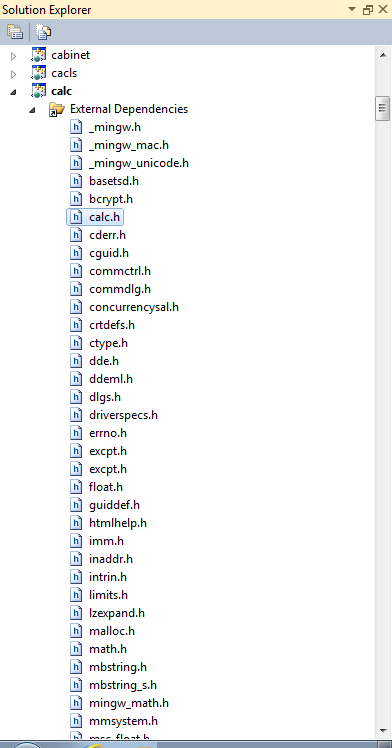
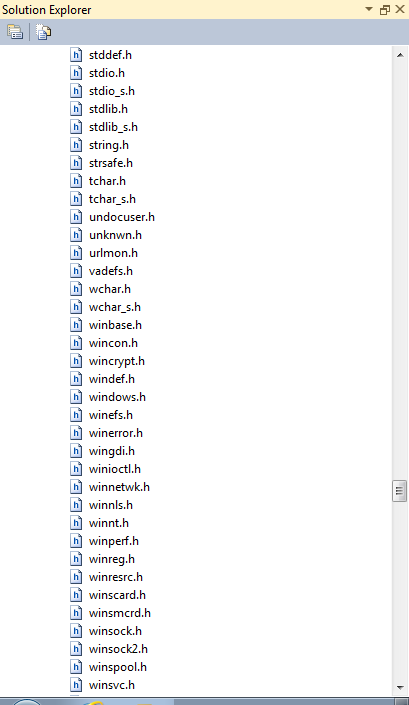
Hi binsys,
The dependencies are supposed to be between projects. For example, mspaint would be dependent upon libcomctrl32.lib. It is not possible to have dependencies between project if the IDE is not aware of the projects.
Indeed, VisualDDK is a good WinDBG functionality, and it was part of my original plan. J
-John
From: ros-dev-bounces@reactos.org [mailto:ros-dev-bounces@reactos.org] On Behalf Of BinSys Sent: Saturday, January 12, 2013 1:34 AM To: ReactOS Development List Subject: Re: [ros-dev] Notice Of Intent - Visual Studio Build of ReactOS
If you open the the output-VS11-i386\reactos\ntoskrnl\NTOS.sln file, you will find that the dependence is not lost.Like this, each component has its own sln file, very convenient.Root sln file is still available.Only at the beginning of each CMakeLists.txt file a PROJECT (***).
In addition, VisualDDK very good the WinDBG functionality ported to the IDE.
At 2013-01-12 02:49:02,"J. C. Jones" jaibuduvin@gmail.com wrote:
It also takes quite a while to close: about 1 minute on my Virtual Box machine (1GB RAM) running inside i5/8GB.
Having a .sln file for each project would reduce the load time obviously, but that would defeat the purpose of using an IDE. There is a natural workflow with the IDE. The idea is to capture that workflow. If the work flow is lost, then it makes more sense to go back to using Visual Studio as an editor, and building "manually", because there is such a thing as the "productivity" tool becoming a burden itself..
I am wondering if the load-time can be reduced by reworking the project settings. From the moment I load the .sln, to the moment that I can start editing a .c file, there is a 48-second delay in the virtual machine above. Of course, during this delay, Visual Studio is:
1. building internal dependency graphs based on #include files.
2. building internal parse tree to support IntelliSense and other things.
As it stands, unless I am mistaken, the #include directories that are being specified to the IDE include superfluous paths, which would result in a (likely very small) performance increase based on directory searching alone. Here is the list of the #include directories for the calc application:
Here is a partial list of the #include file dependencies for calc. One can conclude that there might be dependencies that are superfluous:
This appears to be the case for several applications, including Notepad, which includes headers for cryptography and networking:
There are things that the programmer can do to reduce the pollution of the compiler's parse tree. One should add the following macro to the compiler's command-line when possible:
WIN32_LEAN_AND_MEAN
This #define disables entire blocks of /#ifdef,#include, #include, #include, #include, #include,#endif/ sequences in Windows(-like?) header files, which would obviously prevent the compiler from processing those header files into its parse tree.
As a basic metric, before leaving the conversion to Amine, I converted roughly 10% of the 800 projects in ReactOS to the IDE. The load time was 3 seconds for this 10%, but I had not yet specified the #include paths to the IDE, and hence, the code was not building, and surely, the edit-time compilation was aborting each time that it could not find a #include file, for, say, mminit.c.
This leaves us to conclude that the best way to find out what the true performance will be is to finish the structure of the .sln and .vcproj files to their final state, removing superfluous paths and inclusions, and measure that.
Finally, all of this is only for x86-32. There is still x86-64, and ARM to consider. Fortunately, Visual Studio knows better than to build IntelliSense databases for all CPU's simultaneously. When the user tells the IDE to use a particular CPU, that is when Visual Studio starts is computation of the IntelliSense parse-tree.
-John
From: ros-dev-bounces@reactos.org [mailto:ros-dev-bounces@reactos.org] On Behalf Of BinSys Sent: Thursday, January 10, 2013 11:48 PM To: ReactOS Development List Subject: Re: [ros-dev] Notice Of Intent - Visual Studio Build of ReactOS
I suggest a sln file in each directory. Only a sln file is too big, very slow to load.
At 2013-01-11 07:01:28,"J. C. Jones" jaibuduvin@gmail.com wrote:
Hi All,
I wanted to give an update since it has been a few days.
As you know, Amine was already in the process of generating Visual Studio .sln and .vcxproj files for the entire ReactOS tree when I started my own parallel conversion to Visual Studio. Therefore, I dropped my own conversion, since there would have been considerable redundancy had I not. Here is what there is so far (Amine can correct me if I am wrong):
1. Developer pulls entire ReactOS source tree from SVN repository.
2. Developer pulls CMake bundle from ReactOS.org
3. Developer includes in ENVIRONMENT variable the path to Cmake bin directory.
4. Developer executes cmake -version.
5. Developer executes configure VSSolution.
6. Developer opens host-tools\reactos.sln and compiles it.
7. Developer opens reactos\reactos.sln and does build.
I am sure Amine can tell you more if you like.
-John
From: ros-dev-bounces@reactos.org [mailto:ros-dev-bounces@reactos.org] On Behalf Of Ged Murphy Sent: Sunday, January 06, 2013 6:11 AM To: ReactOS List Subject: Re: [ros-dev] Notice Of Intent - Visual Studio Build of ReactOS
To speed up the process for you, I'd recommend you get a copy of RosBE and run 'make msvc10'
This will generate all the project files and a solution for for you, in a mostly buildable state. I think it may also generate some property sheets, which you should definitely try to incorporate. I can help you with suitable property sheets if you'd like some advise on this.
We've already put quite a bit of effort into generating dynamic visual studio projects, (as this is definitely the only maintainable solution IMO), so the outputted vcxproj files should lay down a good base for you to work with.
Ged.
From: "J. C. Jones" jaibuduvin@gmail.com Reply-To: ReactOS List ros-dev@reactos.org Date: Friday, 4 January 2013 19:30 To: ReactOS List ros-dev@reactos.org Subject: Re: [ros-dev] Notice Of Intent - Visual Studio Build of ReactOS
Ok. VS2010+ it will be. J
I will do a quick review to make sure that we can get all the multiple-CPU development features, etc. and report back.
Cheers.
From: ros-dev-bounces@reactos.org [mailto:ros-dev-bounces@reactos.org] On Behalf Of Aleksey Bragin Sent: Friday, January 04, 2013 1:25 PM To: ReactOS Development List Subject: Re: [ros-dev] Notice Of Intent - Visual Studio Build of ReactOS
It's up to you of course, but VS2008 is too dated, and VS2012 is "too new" indeed, so many devs will cry about incompatible project files. So, VS2010 would be the ideal bet, as Ged said.
Regards, Alex Bragin
On 04.01.2013 23:21, J. C. Jones wrote:
Yes.
But initially, I wanted to make it so that anyone, especially a newbie, could go from discovering ReactOS, to an edit-compile-link-debug cycle of "Hello, World!" within the IDE in 30 minutes or less (not the OS, just a single app). That means accommodating whatever version of Visual Studio they are using. VS2008 is safe, because, no matter which version they are using: VS2008, VS2010, VS2011, or VS2012, the conversion would be done automatically, on their machine, and since the project files in SVN would be locked, there'd be no harm done to SVN using this method. However, if I start out with VS2012, for example, then, sure, they could go and download VS2012 alongside say, VS2010.but my goal was to present a totally new user with the SVN URL for ReactOS, and say, "Here is is. Give it a try!", and remove all excuses for them trying it out. [I figured that having to install a 1GB+ tool alongside a very similar tool was a bigger excuse for most newbie developers than having to wait < 5 minutes to watch the VS2012 do its conversion.]
That said, if Visual Studio users came back and said, "We're not using VS2008 anyway!" then I would change it, and I am definitely open to ideas on this.
Sent: Friday, January 04, 2013 3:43 AM To: 'ReactOS Development List' Subject: Re: [ros-dev] Notice Of Intent - Visual Studio Build of ReactOS
VS2008?
Shouldn't you be doing this in 2012, especially considering the much improved support for kernel mode projects.
At the very least you should be using 2010 as 2012 can open 2010 project without modification to project files.
From: ros-dev-bounces@reactos.org [mailto:ros-dev-bounces@reactos.org] On Behalf Of J. C. Jones Sent: 04 January 2013 02:40 To: 'ReactOS Development List' Subject: Re: [ros-dev] Notice Of Intent - Visual Studio Build of ReactOS
Yes, it is one thing to create a project file, which takes 15-30 seconds. It is another thing to get the configuration right. Fortunately, there are copious notes and highly-readable scripts in the tree which practically say what needs to be done, so I do not anticipate any major hurdles.
I spent a little time in the source tree today. I integrated a few modules into Visual Studio 2008, an tested calc, by buiding it from within Visual Studio for x86-32 and x86-64. It ran fine, thanks to the author(Mr. Carlo Bramini) who left good notes in his source code. Just for kicks, I also created an ARM-based project that would run on the Raspberry Pi, compiled it from within VS2008, and ran it inside the emulator that comes with VS2008. That ran fine also. Tomorrow I will ask a colleague to try the following:
1. Pull the repository to his local hard disk from inside Visual Studio.
2. Hit Build.
3. Run calc in an edit- compile-debug loop.
From: ros-dev-bounces@reactos.org [mailto:ros-dev-bounces@reactos.org] On Behalf Of Timo Kreuzer Sent: Thursday, January 03, 2013 2:18 AM To: ReactOS Development List Subject: Re: [ros-dev] Notice Of Intent - Visual Studio Build of ReactOS
Am 02.01.2013 19:04, schrieb J. C. Jones:
It would take 2-3 hours to create VS projects for all user-mode modules.
No offence, but I think you are highly underestimating the magnitude of our codebase. We are talking about several hundred modules. And you probably also overestimate the pace at which you can create project files. I did that myself for a much smaller project, so I know what I'm talking about. But maybe I'm wrong and they call you "The Machine" :D
_____
_____
No virus found in this message. Checked by AVG - www.avg.com Version: 2013.0.2805 / Virus Database: 2637/6008 - Release Date: 01/03/13
_______________________________________________ Ros-dev mailing list Ros-dev@reactos.org http://www.reactos.org/mailman/listinfo/ros-dev
_____
No virus found in this message. Checked by AVG - www.avg.com Version: 2013.0.2805 / Virus Database: 2637/6012 - Release Date: 01/05/13
_____
No virus found in this message. Checked by AVG - www.avg.com Version: 2013.0.2890 / Virus Database: 2637/6023 - Release Date: 01/10/13
_____
No virus found in this message. Checked by AVG - www.avg.com Version: 2013.0.2890 / Virus Database: 2637/6025 - Release Date: 01/11/13
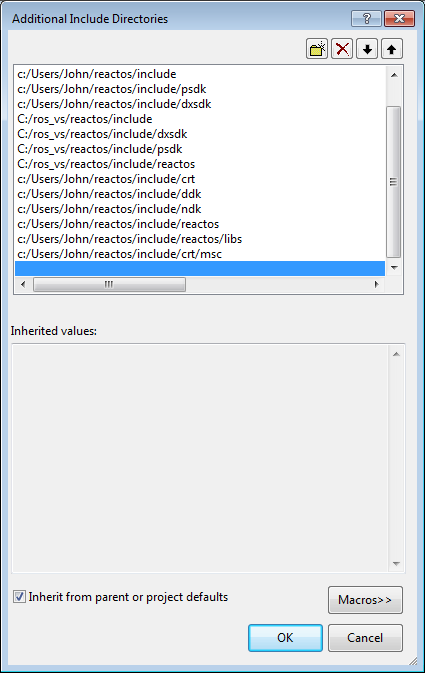
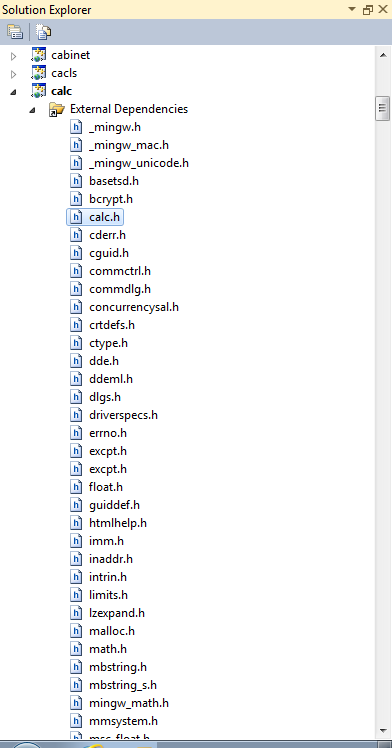
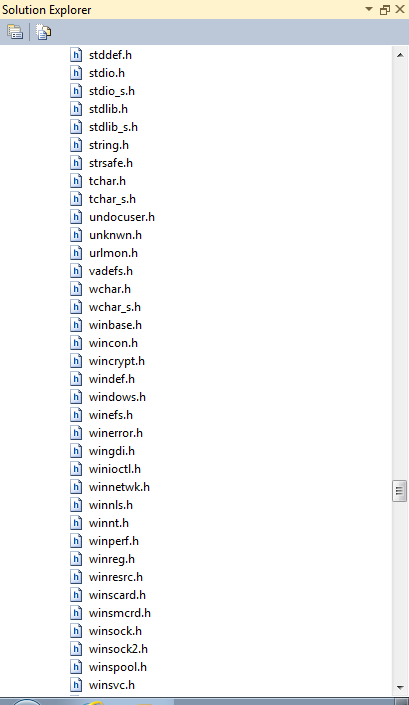
Am 11.01.2013 06:48, schrieb BinSys:
I suggest a sln file in each directory. Only a sln file is too big, very slow to load.
I agree, but before changing this, we should measure a possible performance impact on the configure operation. (We are talking about generating a few hundred solution files) I don't know if it has any impact at all (especially for non-VS build), but you never know...
Having a solution for each project is like having a separate build system for each project. You could probably break it down to between 5-10 solutions, having one for each major area of the build but anything more would be detrimental to the advantages of using VS.
From: Timo Kreuzer timo.kreuzer@web.de Reply-To: ReactOS List ros-dev@reactos.org Date: Friday, 11 January 2013 21:16 To: ReactOS List ros-dev@reactos.org Subject: Re: [ros-dev] Notice Of Intent - Visual Studio Build of ReactOS
Am 11.01.2013 06:48, schrieb BinSys:
I suggest a sln file in each directory. Only a sln file is too big, very slow to load.
I agree, but before changing this, we should measure a possible performance impact on the configure operation. (We are talking about generating a few hundred solution files) I don't know if it has any impact at all (especially for non-VS build), but you never know...
_______________________________________________ Ros-dev mailing list Ros-dev@reactos.org http://www.reactos.org/mailman/listinfo/ros-dev
".having one for each major area of the build but anything more would be detrimental to the advantages of using VS."
Why?
From: ros-dev-bounces@reactos.org [mailto:ros-dev-bounces@reactos.org] On Behalf Of Ged Murphy Sent: Friday, January 11, 2013 6:51 PM To: ReactOS List Subject: Re: [ros-dev] Notice Of Intent - Visual Studio Build of ReactOS
Having a solution for each project is like having a separate build system for each project.
You could probably break it down to between 5-10 solutions, having one for each major area of the build but anything more would be detrimental to the advantages of using VS.
From: Timo Kreuzer timo.kreuzer@web.de Reply-To: ReactOS List ros-dev@reactos.org Date: Friday, 11 January 2013 21:16 To: ReactOS List ros-dev@reactos.org Subject: Re: [ros-dev] Notice Of Intent - Visual Studio Build of ReactOS
Am 11.01.2013 06:48, schrieb BinSys:
I suggest a sln file in each directory. Only a sln file is too big, very slow to load.
I agree, but before changing this, we should measure a possible performance impact on the configure operation. (We are talking about generating a few hundred solution files) I don't know if it has any impact at all (especially for non-VS build), but you never know...
_______________________________________________ Ros-dev mailing list Ros-dev@reactos.org http://www.reactos.org/mailman/listinfo/ros-dev
_____
No virus found in this message. Checked by AVG - www.avg.com Version: 2013.0.2890 / Virus Database: 2637/6025 - Release Date: 01/11/13

I have an idea, which was already almost presented by some of you.
Based on an idea of restructuring our source tree (from some of devs included Amine, iirc), which consists in classifying our things into, e.g. :
NTOS (for kernel + ntdll + some other things)
Drivers
Win32ss (win32k + user32 + winsrv / basesrv)
Audio
Applications
Etc
We could perhaps have a solution for each of these items, which would maybe shorten the time of loading.
Hermès BÉLUSCA - MAÏTO
De : ros-dev-bounces@reactos.org [mailto:ros-dev-bounces@reactos.org] De la part de Ged Murphy Envoyé : samedi 12 janvier 2013 01:51 À : ReactOS List Objet : Re: [ros-dev] Notice Of Intent - Visual Studio Build of ReactOS
Having a solution for each project is like having a separate build system for each project.
You could probably break it down to between 5-10 solutions, having one for each major area of the build but anything more would be detrimental to the advantages of using VS.
From: Timo Kreuzer timo.kreuzer@web.de Reply-To: ReactOS List ros-dev@reactos.org Date: Friday, 11 January 2013 21:16 To: ReactOS List ros-dev@reactos.org Subject: Re: [ros-dev] Notice Of Intent - Visual Studio Build of ReactOS
Am 11.01.2013 06:48, schrieb BinSys:
I suggest a sln file in each directory. Only a sln file is too big, very slow to load.
I agree, but before changing this, we should measure a possible performance impact on the configure operation. (We are talking about generating a few hundred solution files) I don't know if it has any impact at all (especially for non-VS build), but you never know...
_______________________________________________ Ros-dev mailing list Ros-dev@reactos.org http://www.reactos.org/mailman/listinfo/ros-dev
The problem with the load time exists because we are not doing something that we should be doing. If we do that thing, the problem goes away. If you would like to change the structure of the existing ReactOS repository for a different reason, well, OK but if the load time is the only reason
[Remember what I said to you about French versus American bread, Hermès. J]
-John
From: ros-dev-bounces@reactos.org [mailto:ros-dev-bounces@reactos.org] On Behalf Of Hermès BÉLUSCA - MAÏTO Sent: Saturday, January 12, 2013 7:48 AM To: 'ReactOS Development List' Subject: Re: [ros-dev] Notice Of Intent - Visual Studio Build of ReactOS
I have an idea, which was already almost presented by some of you.
Based on an idea of restructuring our source tree (from some of devs included Amine, iirc), which consists in classifying our things into, e.g. :
NTOS (for kernel + ntdll + some other things)
Drivers
Win32ss (win32k + user32 + winsrv / basesrv)
Audio
Applications
Etc
We could perhaps have a solution for each of these items, which would maybe shorten the time of loading.
Hermès BÉLUSCA - MAÏTO
De : ros-dev-bounces@reactos.org [mailto:ros-dev-bounces@reactos.org] De la part de Ged Murphy Envoyé : samedi 12 janvier 2013 01:51 À : ReactOS List Objet : Re: [ros-dev] Notice Of Intent - Visual Studio Build of ReactOS
Having a solution for each project is like having a separate build system for each project.
You could probably break it down to between 5-10 solutions, having one for each major area of the build but anything more would be detrimental to the advantages of using VS.
From: Timo Kreuzer timo.kreuzer@web.de Reply-To: ReactOS List ros-dev@reactos.org Date: Friday, 11 January 2013 21:16 To: ReactOS List ros-dev@reactos.org Subject: Re: [ros-dev] Notice Of Intent - Visual Studio Build of ReactOS
Am 11.01.2013 06:48, schrieb BinSys:
I suggest a sln file in each directory. Only a sln file is too big, very slow to load.
I agree, but before changing this, we should measure a possible performance impact on the configure operation. (We are talking about generating a few hundred solution files) I don't know if it has any impact at all (especially for non-VS build), but you never know...
_______________________________________________ Ros-dev mailing list Ros-dev@reactos.org http://www.reactos.org/mailman/listinfo/ros-dev
_____
No virus found in this message. Checked by AVG - www.avg.com Version: 2013.0.2890 / Virus Database: 2637/6025 - Release Date: 01/11/13
If you would like to change the structure of the existing ReactOS
repository for a different reason, well, OK but if the load time is the only reason
No of course ! If you can arrange this problem in a more elegant way. But I was also referring to a project some devs had in mind, in case it would be a solution to the problem.
Hermès
De : ros-dev-bounces@reactos.org [mailto:ros-dev-bounces@reactos.org] De la part de J. C. Jones Envoyé : samedi 12 janvier 2013 20:09 À : 'ReactOS Development List' Objet : Re: [ros-dev] Notice Of Intent - Visual Studio Build of ReactOS
The problem with the load time exists because we are not doing something that we should be doing. If we do that thing, the problem goes away. If you would like to change the structure of the existing ReactOS repository for a different reason, well, OK but if the load time is the only reason
[Remember what I said to you about French versus American bread, Hermès. J]
-John
From: ros-dev-bounces@reactos.org [mailto:ros-dev-bounces@reactos.org] On Behalf Of Hermès BÉLUSCA - MAÏTO Sent: Saturday, January 12, 2013 7:48 AM To: 'ReactOS Development List' Subject: Re: [ros-dev] Notice Of Intent - Visual Studio Build of ReactOS
I have an idea, which was already almost presented by some of you.
Based on an idea of restructuring our source tree (from some of devs included Amine, iirc), which consists in classifying our things into, e.g. :
NTOS (for kernel + ntdll + some other things)
Drivers
Win32ss (win32k + user32 + winsrv / basesrv)
Audio
Applications
Etc
We could perhaps have a solution for each of these items, which would maybe shorten the time of loading.
Hermès BÉLUSCA - MAÏTO
De : ros-dev-bounces@reactos.org [mailto:ros-dev-bounces@reactos.org] De la part de Ged Murphy Envoyé : samedi 12 janvier 2013 01:51 À : ReactOS List Objet : Re: [ros-dev] Notice Of Intent - Visual Studio Build of ReactOS
Having a solution for each project is like having a separate build system for each project.
You could probably break it down to between 5-10 solutions, having one for each major area of the build but anything more would be detrimental to the advantages of using VS.
From: Timo Kreuzer timo.kreuzer@web.de Reply-To: ReactOS List ros-dev@reactos.org Date: Friday, 11 January 2013 21:16 To: ReactOS List ros-dev@reactos.org Subject: Re: [ros-dev] Notice Of Intent - Visual Studio Build of ReactOS
Am 11.01.2013 06:48, schrieb BinSys:
I suggest a sln file in each directory. Only a sln file is too big, very slow to load.
I agree, but before changing this, we should measure a possible performance impact on the configure operation. (We are talking about generating a few hundred solution files) I don't know if it has any impact at all (especially for non-VS build), but you never know...
_______________________________________________ Ros-dev mailing list Ros-dev@reactos.org http://www.reactos.org/mailman/listinfo/ros-dev
_____
No virus found in this message. Checked by AVG - www.avg.com Version: 2013.0.2890 / Virus Database: 2637/6025 - Release Date: 01/11/13
*cough* :D
Am 12.01.2013 14:47, schrieb Hermès BÉLUSCA - MAÏTO:
I have an idea, which was already almost presented by some of you.
Based on an idea of restructuring our source tree (from some of devs included Amine, iirc), which consists in classifying our things into, e.g. :
NTOS (for kernel + ntdll + some other things)
Drivers
Win32ss (win32k + user32 + winsrv / basesrv)
Audio
Applications
Etc...
We could perhaps have a solution for each of these items, which would maybe shorten the time of loading.
Hermès BÉLUSCA - MAÏTO
*De :*ros-dev-bounces@reactos.org [mailto:ros-dev-bounces@reactos.org] *De la part de* Ged Murphy *Envoyé :* samedi 12 janvier 2013 01:51 *À :* ReactOS List *Objet :* Re: [ros-dev] Notice Of Intent - Visual Studio Build of ReactOS
Having a solution for each project is like having a separate build system for each project.
You could probably break it down to between 5-10 solutions, having one for each major area of the build but anything more would be detrimental to the advantages of using VS.
*From: *Timo Kreuzer <timo.kreuzer@web.de mailto:timo.kreuzer@web.de> *Reply-To: *ReactOS List <ros-dev@reactos.org mailto:ros-dev@reactos.org> *Date: *Friday, 11 January 2013 21:16 *To: *ReactOS List <ros-dev@reactos.org mailto:ros-dev@reactos.org> *Subject: *Re: [ros-dev] Notice Of Intent - Visual Studio Build of ReactOS
Am 11.01.2013 06:48, schrieb BinSys:
I suggest a sln file in each directory. Only a sln file is too big, very slow to load.I agree, but before changing this, we should measure a possible performance impact on the configure operation. (We are talking about generating a few hundred solution files) I don't know if it has any impact at all (especially for non-VS build), but you never know...
_______________________________________________ Ros-dev mailing list Ros-dev@reactos.org mailto:Ros-dev@reactos.org http://www.reactos.org/mailman/listinfo/ros-dev
Ros-dev mailing list Ros-dev@reactos.org http://www.reactos.org/mailman/listinfo/ros-dev
See my last mail
De : ros-dev-bounces@reactos.org [mailto:ros-dev-bounces@reactos.org] De la part de Timo Kreuzer Envoyé : samedi 12 janvier 2013 22:19 À : ReactOS Development List Objet : Re: [ros-dev] Notice Of Intent - Visual Studio Build of ReactOS
*cough* :D
Am 12.01.2013 14:47, schrieb Hermès BÉLUSCA - MAÏTO:
I have an idea, which was already almost presented by some of you.
Based on an idea of restructuring our source tree (from some of devs included Amine, iirc), which consists in classifying our things into, e.g. :
NTOS (for kernel + ntdll + some other things)
Drivers
Win32ss (win32k + user32 + winsrv / basesrv)
Audio
Applications
Etc
We could perhaps have a solution for each of these items, which would maybe shorten the time of loading.
Hermès BÉLUSCA - MAÏTO
De : ros-dev-bounces@reactos.org [mailto:ros-dev-bounces@reactos.org] De la part de Ged Murphy Envoyé : samedi 12 janvier 2013 01:51 À : ReactOS List Objet : Re: [ros-dev] Notice Of Intent - Visual Studio Build of ReactOS
Having a solution for each project is like having a separate build system for each project.
You could probably break it down to between 5-10 solutions, having one for each major area of the build but anything more would be detrimental to the advantages of using VS.
From: Timo Kreuzer timo.kreuzer@web.de Reply-To: ReactOS List ros-dev@reactos.org Date: Friday, 11 January 2013 21:16 To: ReactOS List ros-dev@reactos.org Subject: Re: [ros-dev] Notice Of Intent - Visual Studio Build of ReactOS
Am 11.01.2013 06:48, schrieb BinSys:
I suggest a sln file in each directory. Only a sln file is too big, very slow to load.
I agree, but before changing this, we should measure a possible performance impact on the configure operation. (We are talking about generating a few hundred solution files) I don't know if it has any impact at all (especially for non-VS build), but you never know...
_______________________________________________ Ros-dev mailing list Ros-dev@reactos.org http://www.reactos.org/mailman/listinfo/ros-dev
_______________________________________________ Ros-dev mailing list Ros-dev@reactos.org http://www.reactos.org/mailman/listinfo/ros-dev
I would caution everyone to not forget the whole purpose of using Visual Studio is to make development by Visual Studio users easier, not harder. Generating .sln files that can be loaded in this way, even if the generation operation takes less than 1 second, would still result in 800 .sln files. This would be somewhat bizzare, since Visual Studio can have only one .sln file open at once. There are inter-project dependencies that would be lost, to name one of numerous problems that would arise.
Our effort should focus on getting the integration done the way it should be. Doing that might make the performance problems moot. If it turns out that the problems still exists, it will be easy to scale back. Right now, as it stands, the cake is not yet fully baked.
-John
From: ros-dev-bounces@reactos.org [mailto:ros-dev-bounces@reactos.org] On Behalf Of Timo Kreuzer Sent: Friday, January 11, 2013 3:17 PM To: ReactOS Development List Subject: Re: [ros-dev] Notice Of Intent - Visual Studio Build of ReactOS
Am 11.01.2013 06:48, schrieb BinSys:
I suggest a sln file in each directory. Only a sln file is too big, very slow to load.
I agree, but before changing this, we should measure a possible performance impact on the configure operation. (We are talking about generating a few hundred solution files) I don't know if it has any impact at all (especially for non-VS build), but you never know...
_____
No virus found in this message. Checked by AVG - www.avg.com Version: 2013.0.2890 / Virus Database: 2637/6025 - Release Date: 01/11/13
Hi !
- Developer executes cmake version.
This is just to see that indeed cmake is reachable in your current console session, and it must display: cmake version 2.8.10.2-ReactOS
Cheers, Hermès
---------------------------------------------------------------------------- -------------------------------------
De : ros-dev-bounces@reactos.org [mailto:ros-dev-bounces@reactos.org] De la part de J. C. Jones Envoyé : vendredi 11 janvier 2013 00:01 À : 'ReactOS Development List' Objet : Re: [ros-dev] Notice Of Intent - Visual Studio Build of ReactOS
Hi All, I wanted to give an update since it has been a few days.
As you know, Amine was already in the process of generating Visual Studio .sln and .vcxproj files for the entire ReactOS tree when I started my own parallel conversion to Visual Studio. Therefore, I dropped my own conversion, since there would have been considerable redundancy had I not. Here is what there is so far (Amine can correct me if I am wrong): 1. Developer pulls entire ReactOS source tree from SVN repository. 2. Developer pulls CMake bundle from ReactOS.org 3. Developer includes in ENVIRONMENT variable the path to Cmake bin directory. 4. Developer executes cmake version. 5. Developer executes configure VSSolution. 6. Developer opens host-tools\reactos.sln and compiles it. 7. Developer opens reactos\reactos.sln and does build.
I am sure Amine can tell you more if you like. -John
I thought I would show the mock-up of Visual Studio hosting (a part of) the repository. As you can see, I only "did" ' 7 projects, which, of course, are not really "done". There are compilation errors, most of which are easily fixed (setting the include path), but I did not correct them because, as I said, this is merely a mock-up. However, the ARMv4 support is real, courtesy of Visual Studio 2008, which comes with an ARMv4 compiler, which, after some tweaks, should compile runnable code for the Raspberry Pi as a bonus. No, it's not ARMv7, but it would still allow hoards of younger enthusiasts to get their Win32 apps to run natively under ReactOS on Raspberry Pi. All files for ntoskrnl were put in their corresponding spots. I wanted to try one of the larger projects to check the Intellisense of a large project. And finally, SVN integration is working, so check-in can be done right from the IDE after an edit-compile-test cycle. Also, because of direct SVN integration inside Visual Studio, any change to the structure of the solution, like, say renaming a project, or moving 20 files from one project to another another, automatically gets propagated back to SVN server, as you can imagine.
Cheers,
-John
From: ros-dev-bounces@reactos.org [mailto:ros-dev-bounces@reactos.org] On Behalf Of Timo Kreuzer Sent: Thursday, January 03, 2013 2:18 AM To: ReactOS Development List Subject: Re: [ros-dev] Notice Of Intent - Visual Studio Build of ReactOS
Am 02.01.2013 19:04, schrieb J. C. Jones:
It would take 2-3 hours to create VS projects for all user-mode modules.
No offence, but I think you are highly underestimating the magnitude of our codebase. We are talking about several hundred modules. And you probably also overestimate the pace at which you can create project files. I did that myself for a much smaller project, so I know what I'm talking about. But maybe I'm wrong and they call you "The Machine" :D
_____
No virus found in this message. Checked by AVG - www.avg.com Version: 2013.0.2805 / Virus Database: 2637/6005 - Release Date: 01/02/13
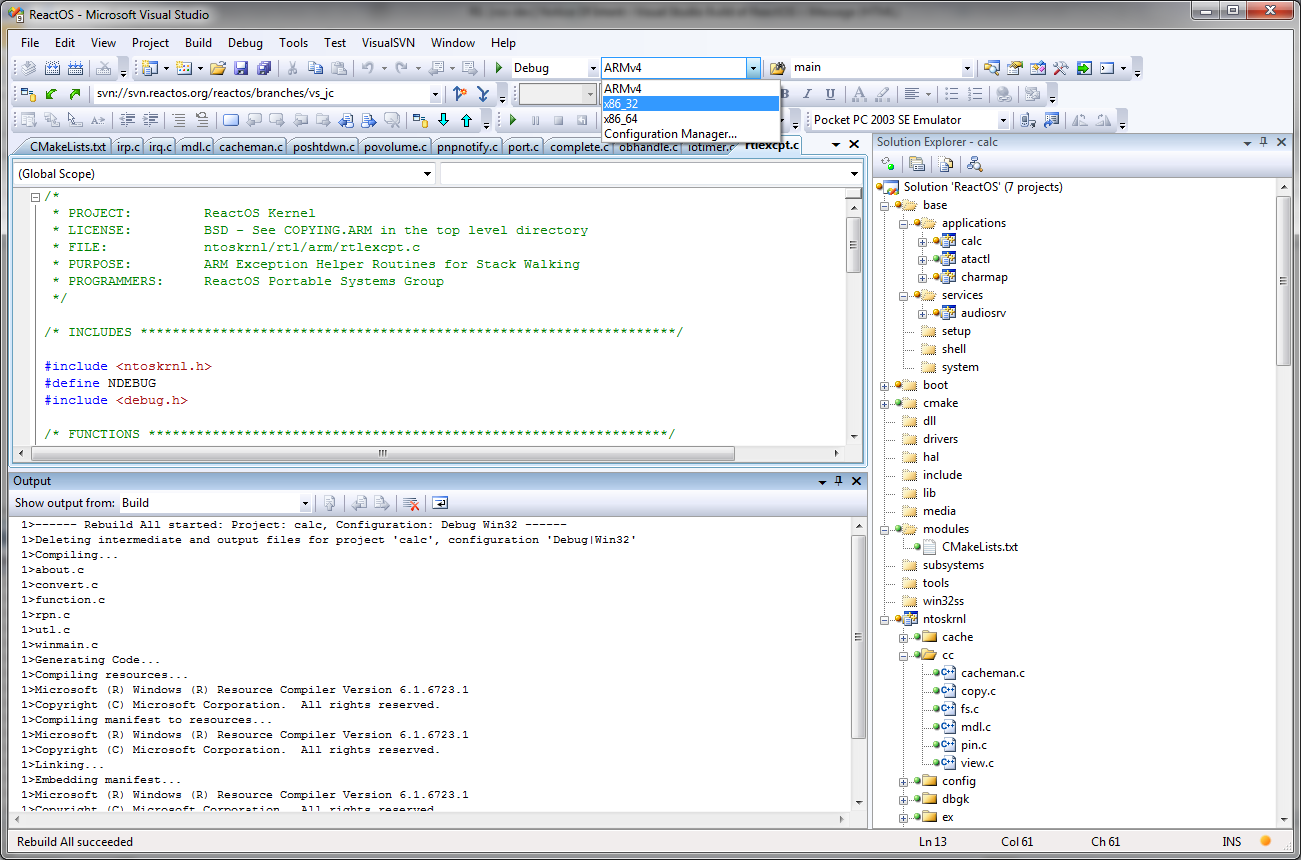
Hi JC, I highly appreciate your non-biased view on the matter. However, I'm afraid I'll have to justify why this is being done this way.
In theory and in practice, it's doable. An effort may be done to create a full set of build steps so that ReactOS builds by pressing Ctrl+Shift+B. But think of it: it's going to be another build system, parallel to the existing one, and it will live as long as maintainers want to support it. Every change to the build process (e.g. adding a new source code file) would need to be duplicated in the vs projects file tree.
It may be possible to automate creation of these project files and the solution, but still it would involve a serious effort to make these generated projects actually buildable. I'm not aware about current status of that builder.
What I suggest you to do in any case is to try building ReactOS with RosBE now. You need to feel [simplicity of] the current build system before trying to improve it - that'd be a logical step in any improvement process.
Best regards, Alex Bragin
On 02.01.2013 0:46, J. C. Jones wrote:
Hi All,
Some of you might have seen my recent on the post regarding the build process: http://www.reactos.org/forum/viewtopic.php?f=9&t=12240&start=15
As I mentioned, it would help greatly to lower the barrier-to-entry to less-experienced developers, as well as more experienced developers who might have limited time budgets [Who among us does not have a limited time budget?].
I wanted to send out this message to let everyone know that I intend to use what bit of time that I available right now, at the beginning of January, to tackle this issue head-on. Again, my purpose here is not to step on anyone's toes, but make certain that we never turn away a potentially-valuable contributor simply because they are unnecessarily removed from their development comfort zone. I do realize that there is already on-going work on the build process, and I have no intention of interfering with that.
I will wait 24-hours for any objections/reservations from now before making a hard commitment, but frankly, we really to get this done, like right now.
Happy New Year. :)
-JC
-
 Aleksey Bragin
 -
 BinSys
 -
 Conan Kudo (ニール・ゴンパ)
 -
 Ged Murphy
 -
 Hermès BÉLUSCA - MAÏTO
 -
 J. C. Jones
 -
 Timo Kreuzer
 -
潘宇